Data Sovereignty vs. Data Residency: What’s the Difference?
Data sovereignty and data residency are often used interchangeably, but they represent distinct concepts critical to data compliance and risk management. In an era of cloud adoption, globalized services, and increasing regulatory complexity, understanding the difference between where your data is stored and who governs it is essential for any enterprise handling sensitive or regulated information.
What is Data Residency?
Data residency refers to the geographic location where data is physically stored. It ensures that data is housed within a specific country or region to comply with laws, improve latency, or align with customer expectations. For example, a healthcare provider in Germany may choose to store patient data on servers within the EU to meet GDPR requirements and maintain customer trust.
Data Residency Requirements & Law: By Country Guide
What Is Data Residency? Data residency refers to the physical or geographical location—the country or region—where an organization’s digital data is stored and processed. This location is crucial because it determines which government’s laws and regulations govern that data. This concept is often used alongside two related, but distinct, terms: Data Localization (or Data Localisation) […]
What is Data Sovereignty?
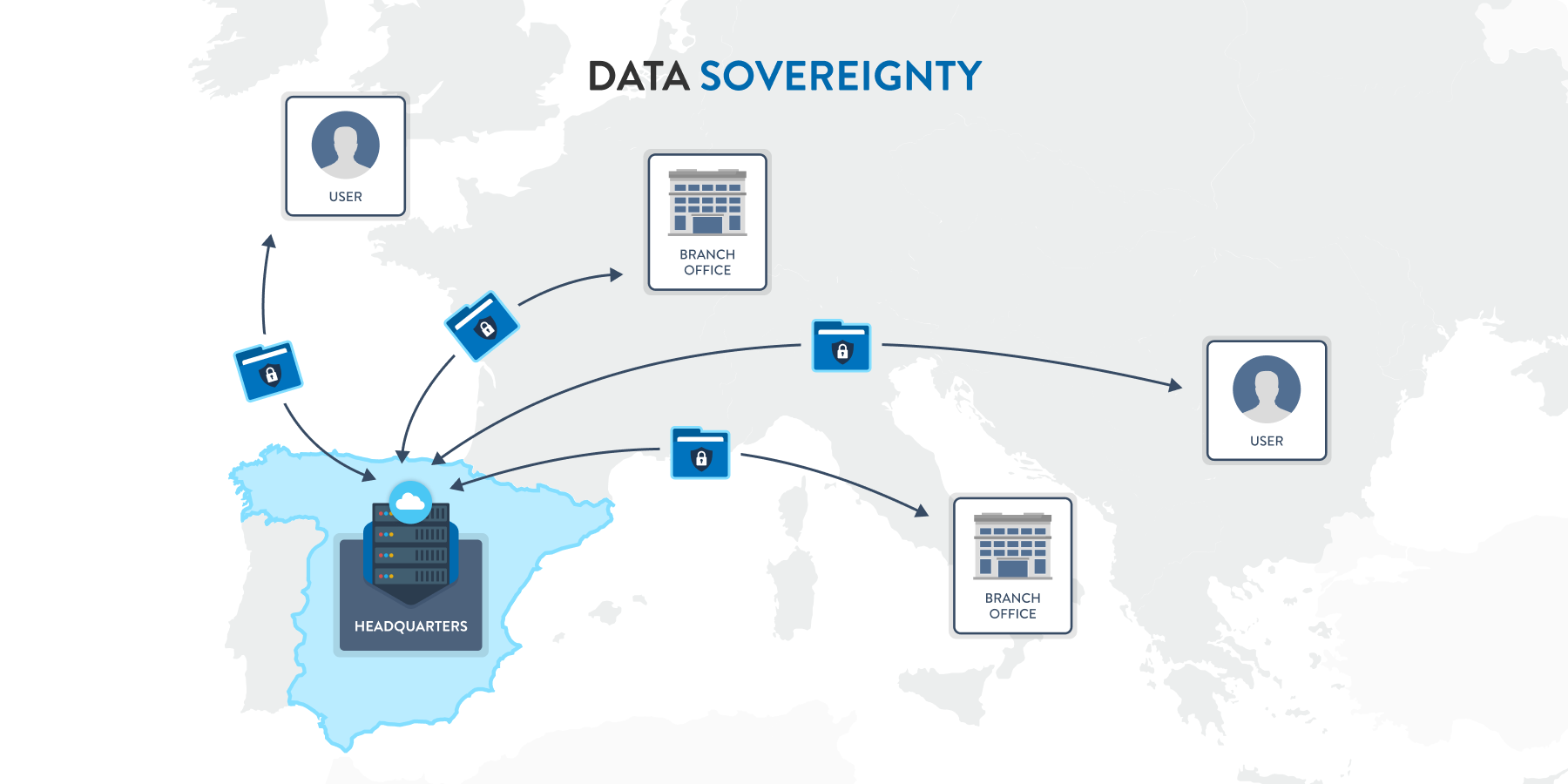
Data sovereignty is the concept that data is subject to the laws and regulations of the country where it is governed—not necessarily where it is stored. This means if your data is stored in a different country, it may still be legally accessed by foreign governments based on ownership or control. Sovereignty introduces legal risk and regulatory responsibilities, particularly for international organizations or those using foreign-owned cloud providers.
What is Data Sovereignty? Guide to Compliance & Requirements
In an era where data breaches make headlines and regulatory fines reach into the billions, understanding data sovereignty has become essential for IT leaders. Whether you’re an IT administrator evaluating secure file sharing solutions or a CTO navigating complex compliance requirements, data sovereignty affects how you store, process, and protect your organization’s most valuable […]
Why is Data Sovereignty Needed?
Data sovereignty is increasingly critical due to:
- Complex Legal Regulations –
Laws like GDPR, HIPAA, and CCPA impose strict requirements on how and where data is handled. Data sovereignty ensures that data governance aligns with national regulations, mitigating the risk of noncompliance.
- Evolving Legal Regulations –
New data protection laws are emerging globally, including mandates for data localization and government access controls. Sovereignty frameworks help organizations stay ahead of shifting legal landscapes, especially in sensitive industries such as finance, healthcare, and defense.
How Do Data Residency vs. Data Sovereignty Differ?
While both deal with data location, their implications diverge significantly. Here’s how they compare:
1. Physical Storage vs. Legal Jurisdiction
Data residency is about where the data physically resides; sovereignty is about who has legal authority over it. A company could store data in Canada (residency) but still be subject to U.S. laws if it’s owned by a U.S. entity (sovereignty).
2. Cloud Hosting Requirements and Infrastructure Control
Residency might be satisfied by choosing a regional data center. Sovereignty, however, requires that both the infrastructure and ownership comply with domestic laws. Sovereign clouds or on-premises deployment often become necessary.
3. Security Protocols and Access Governance
Residency may not prevent unauthorized or extra-jurisdictional access. Sovereignty emphasizes layered security controls—such as encryption and access restrictions—to enforce legal and contractual boundaries.
4. Data Handling, Ownership, and Compliance Processes
Sovereignty frameworks often require full visibility into who owns, accesses, and processes data. Residency typically focuses only on storage compliance, not the broader lifecycle of data management.
5. Sovereign AI and Emerging Regulatory Implications
The rise of AI has accelerated calls for sovereign data environments, where training data and model outputs remain under national control. This is especially critical as governments introduce AI-specific governance tied to data origin and ownership.
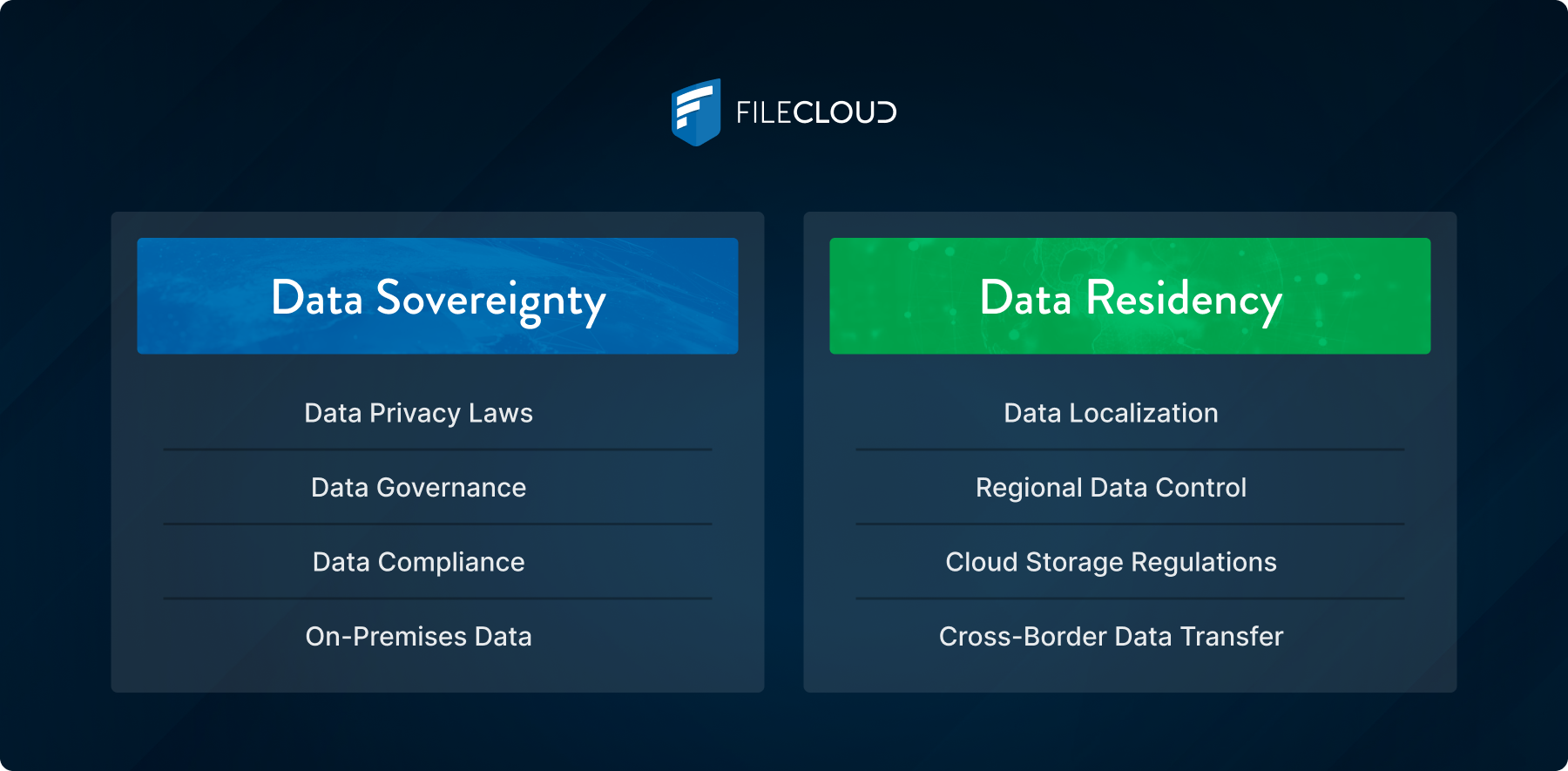
Data Sovereignty vs Data Residency Diagram
Here’s a visual breakdown that compares the key components of data sovereignty and residency to help clarify the distinction:
Partnering with FileCloud for Data Sovereignty Compliance
FileCloud empowers organizations to take full control of their data with deployment options that support data sovereignty, residency, and localization. Whether you operate in government, healthcare, finance, defense, or another highly regulated industry, FileCloud’s self-hosted and regionally-hosted solutions allow you to store and process data in the jurisdiction of your choice—while retaining ownership and full control.
With capabilities like:
FileCloud helps you meet modern regulatory demands and safeguard sensitive data across borders. Trusted by governments and enterprises globally, FileCloud is your partner in building a secure, compliant, and future-proof data infrastructure.

Data Residency vs Sovereignty FAQs
How does data localization differ from data sovereignty and residency?
Data localization requires that certain data be stored and processed within a specific country’s borders. While data residency is about where the data is stored, and sovereignty is about who controls it, localization is a strict regulatory mandate to keep data within a nation’s territory.
Why is understanding data residency vs. sovereignty important for compliance?
Understanding the distinction helps organizations meet international and industry-specific regulations. Sovereignty may subject data to national surveillance laws, while residency ensures storage aligns with geographic requirements.
Can data residency exist without data sovereignty?
Yes. For example, a company might store data in a particular country (residency) but still be subject to another country’s laws (sovereignty) if the controlling entity is headquartered there.
Which matters more—data sovereignty or data residency?
It depends on the regulatory landscape and industry. In sectors like finance or defense, data sovereignty is often more critical due to jurisdictional control. In others, like healthcare, residency may be prioritized to meet storage compliance.

Product Marketing Manager