Post updated August 8, 2025
OpenText vs FileCloud: A Comprehensive Comparison for Enterprise Decision-Makers
When evaluating enterprise content and file management solutions, IT leaders often find themselves comparing established Enterprise Content Management (ECM) platforms like OpenText Content Cloud against Enterprise File Sync and Share (EFSS) solutions like FileCloud. Understanding the fundamental difference between these approaches is crucial for making the right choice. In this blog post, we compare how these two solutions function across enterprise functionalities and why we believe FileCloud is a powerful OpenText alternative.
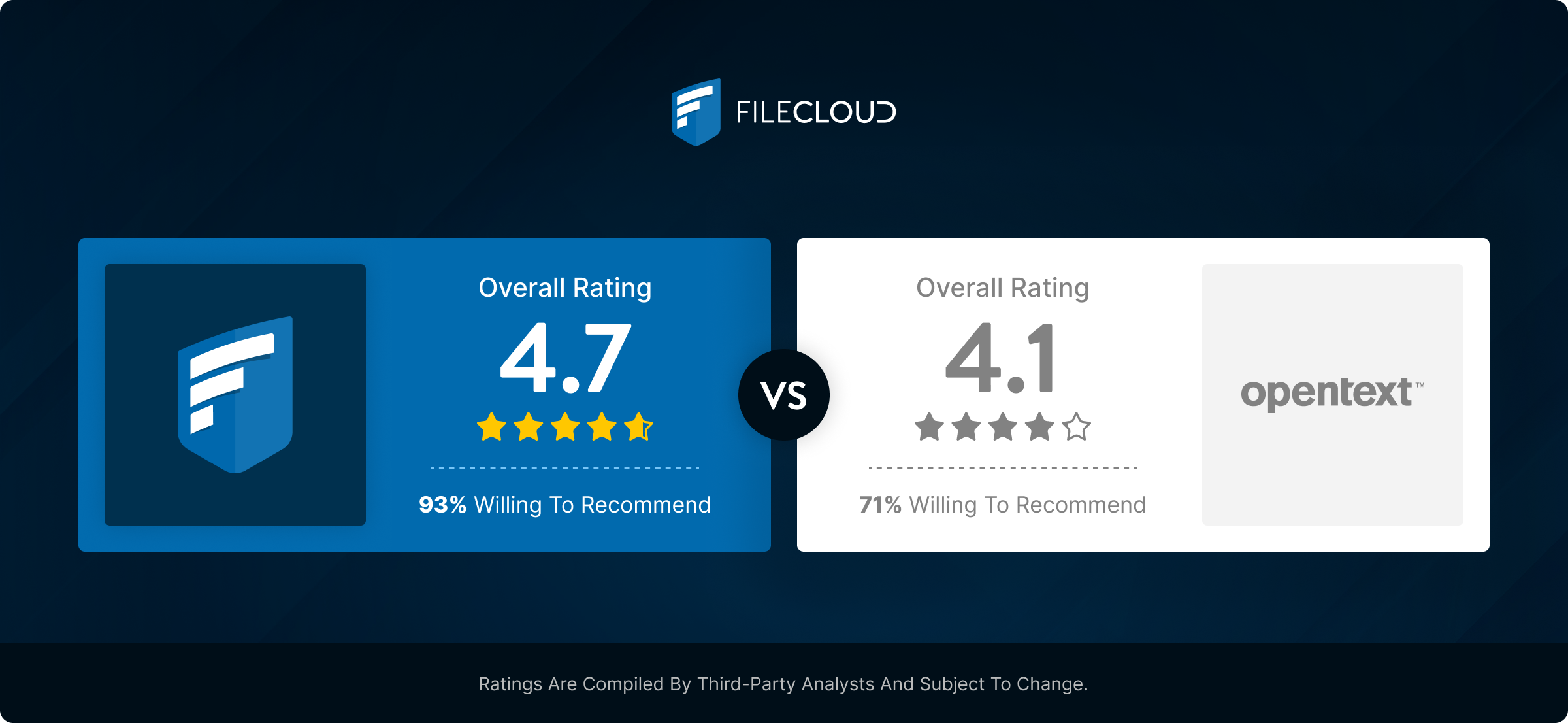
ECM vs EFSS
ECM solutions like OpenText focus on comprehensive document lifecycle management, workflow automation, and complex content governance across entire organizational ecosystems. These platforms excel at managing structured content processes, regulatory compliance, and integration with enterprise applications. Oftentimes, ECMs are used to piece together backend IT applications to create a connected, automated infrastructure.
However, this comprehensive approach often comes with significant complexity in deployment, administration, and user adoption. While applications may be better connected, the ability for humans to leverage data can be stymied with steep learning curves, access limitations, and a lack of secure collaboration features.
EFSS solutions like FileCloud, on the other hand, prioritize secure file sharing, real-time collaboration, and intuitive user experiences while still delivering enterprise-grade security, centralized IT infrastructure, and compliance capabilities. This focused approach typically results in faster deployment, easier administration, and higher user adoption rates.
For organizations wrestling with complex enterprise content management systems that prioritize features over usability, or those seeking an OpenText alternative that doesn’t require dedicated specialist teams to manage, this comparison explores why many enterprises are choosing the EFSS approach with FileCloud.

OpenText vs FileCloud: Deployment
The deployment approach reveals one of the most significant differences between these platforms. OpenText, as a comprehensive ECM provider, offers a wide variety of products including OpenText Content Cloud (which we focus on here as FileCloud’s most relevant comparison), Content Manager, Extended ECM, and numerous specialized modules.
These products are positioned as parallel solutions (even though product descriptions can sometimes sound overlapping) that can be combined and configured together. Each deployment becomes a custom configuration requiring careful evaluation of which products, modules, and add-ons will meet specific business requirements.
This modular approach can create complexity for IT administrators who must navigate OpenText’s extensive product catalog to identify the right combination of solutions. The challenge extends beyond initial selection—understanding the total cost of ownership becomes difficult without transparent deployment pricing, making it harder for organizations to plan for business growth or accurately budget for scaling IT infrastructure over time.
FileCloud takes a streamlined deployment approach that adapts to existing organizational infrastructure without requiring complex product selection decisions. Whether organizations need on-premises control for sensitive data, want to leverage existing cloud investments, or prefer a hybrid model, FileCloud provides consistent functionality across deployment models and enterprise tiers. This unified approach eliminates the guesswork in product selection and provides transparent pricing that enables accurate long-term planning for business growth and infrastructure scaling.

FileCloud vs OpenText: Admin Capabilities
Administrative overhead can make or break an enterprise file sharing solution. OpenText Content Cloud, being part of a larger enterprise content management ecosystem, often requires specialized knowledge and dedicated resources to manage effectively. The platform’s complexity can create bottlenecks when IT teams need to make quick configuration changes, add new users, or troubleshoot access issues.
FileCloud was designed with IT efficiency in mind. The centralized admin console provides intuitive oversight across all deployment models, whether organizations are managing on-premises servers, cloud instances, or hybrid configurations. Simple pricing across feature-rich Enterprise tiers eliminates guesswork in capacity planning and budgeting, giving IT leaders the transparency they need for accurate TCO calculations and business growth planning. This streamlined approach means IT teams can focus on strategic initiatives rather than wrestling with administrative complexity.

OpenText vs FileCloud: Security
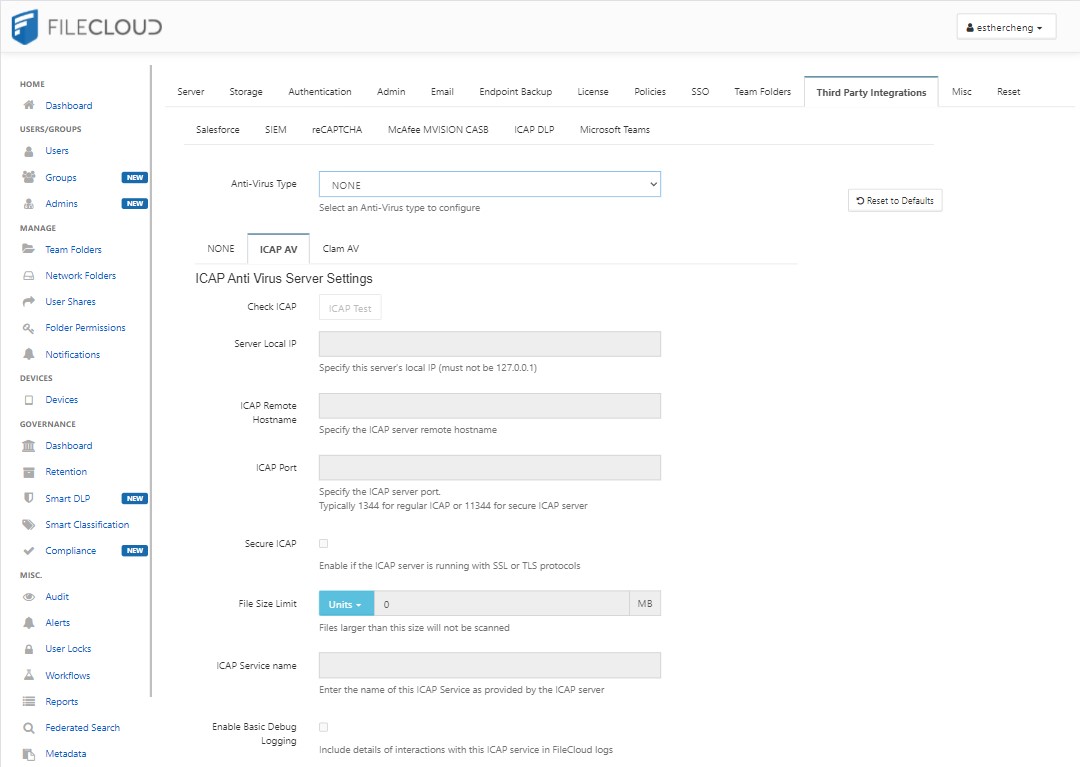
Security architecture represents another area where these platforms diverge significantly. While OpenText offers enterprise-grade security through encryption and MFA policy enforcement, additional ransomware protection and advanced antivirus capabilities often require separate add-ons (e.g., Cybersecurity Cloud, Data Security Services). Instead of offering a comprehensive security solution, IT admins working with OpenText must know exactly what they need and then source those missing components from third party providers.
FileCloud builds comprehensive security into its core platform. The EFSS solution includes built-in antivirus scanning and ransomware protection, security notifications, active directory/LDAP integration, encryption for data at rest and in transit, role based access controls, and MFA policies as standard features.
This integrated approach means organizations get enterprise-grade protection without juggling multiple security add-ons or vendor relationships. FileCloud’s zero-trust security model empowers admins with the ability to create fine-tuned policies and permissions, so every access request is verified and validated.
FileCloud vs OpenText: Collaboration & Sharing
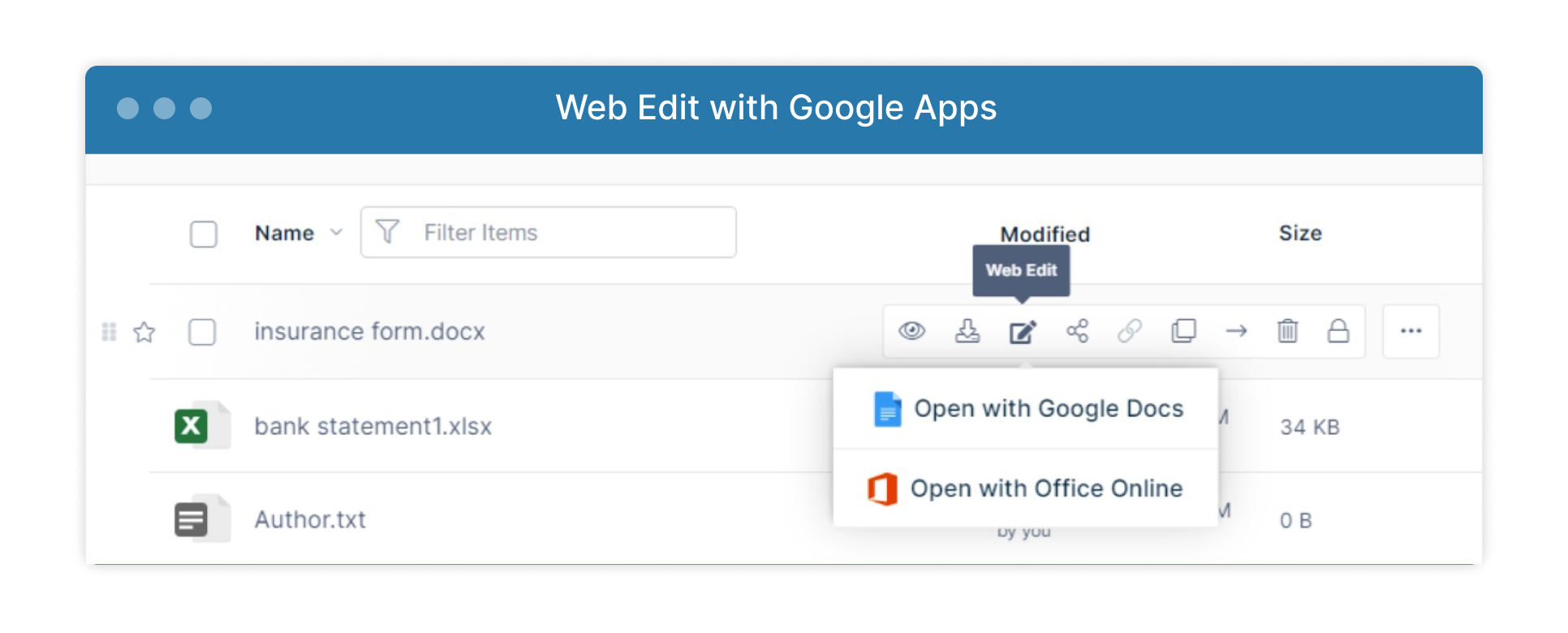
Real-time collaboration capabilities reveal another key differentiator. OpenText Content Cloud offers collaboration features, but they’re often limited compared to modern expectations. For example, Google Workspace integration is only available through the Public Cloud deployment option. This means no real-time co-authoring for organizations working with Google Docs, Sheets, or Slides if they have any other OpenText deployment. This limitation can force organizations into deployment decisions based on collaboration requirements, with downstream complications for security and compliance.
FileCloud provides robust collaboration and external file sharing capabilities regardless of deployment model, across Microsoft 365 and Google Workspace. Users can collaborate on documents in real-time in native web apps, without leaving the secure FileCloud environment. They can also share files securely with external partners and maintain full version control. The platform’s granular permissions system ensures that collaboration doesn’t come at the expense of security or compliance.
OpenText vs FileCloud: Content Management
OpenText Content Cloud offers a certain range of content management capabilities, but certain functionalities may not be part of the product. For instance:
- Metadata tagging and content scanning (full text or OCR) → OpenText Content Core (included with Content Cloud)
- Sensitive data or PII pattern search capabilities → OpenText Data Privacy and Protection (Voltage) Enterprise
- Content lifecycle management (retention) → Information Governance
The impact of the API-driven content management strategy is a platform that prioritizes process automation over collaboration, which can create friction for end users.
FileCloud balances powerful content management capabilities with intuitive user experience. The platform includes robust versioning, retention controls, and content organization tools without the complexity that often accompanies enterprise ECM solutions. Users get the file management capabilities they need (without requiring extensive training or IT support) and admins maintain full control over data access and activities.

FileCloud vs OpenText: Compliance & Governance
Regulatory compliance continues to evolve, with new requirements emerging regularly across different industries and geographies. OpenText Content Cloud provides compliance tools, but the platform’s complexity can make it challenging to implement and maintain consistent governance policies, especially for organizations without dedicated compliance specialists. Furthermore, many of the governance features are spread across a variety of modules, such as OpenText Directory Services, Migrate, Data Privacy and Protection (Voltage) Enterprise, Information Governance, Cybersecurity Cloud, and Data Security Services.
FileCloud’s compliance and governance capabilities are built on multi-layered security architecture that adapts to regulatory requirements without sacrificing usability. The platform includes data residency controls, audit trails, retention policies, and governance tools that integrate seamlessly with existing compliance workflows. This responsive approach to compliance means organizations can adapt to new regulatory requirements without overhauling the entire content management strategy.

OpenText vs FileCloud: Remote (Mobile) Access
Mobile and remote access capabilities have become non-negotiable for modern workforces. OpenText Content Cloud provides mobile access, but the user experience often reflects the platform’s enterprise heritage focused on process automation and application data relay rather than modern mobility expectations.
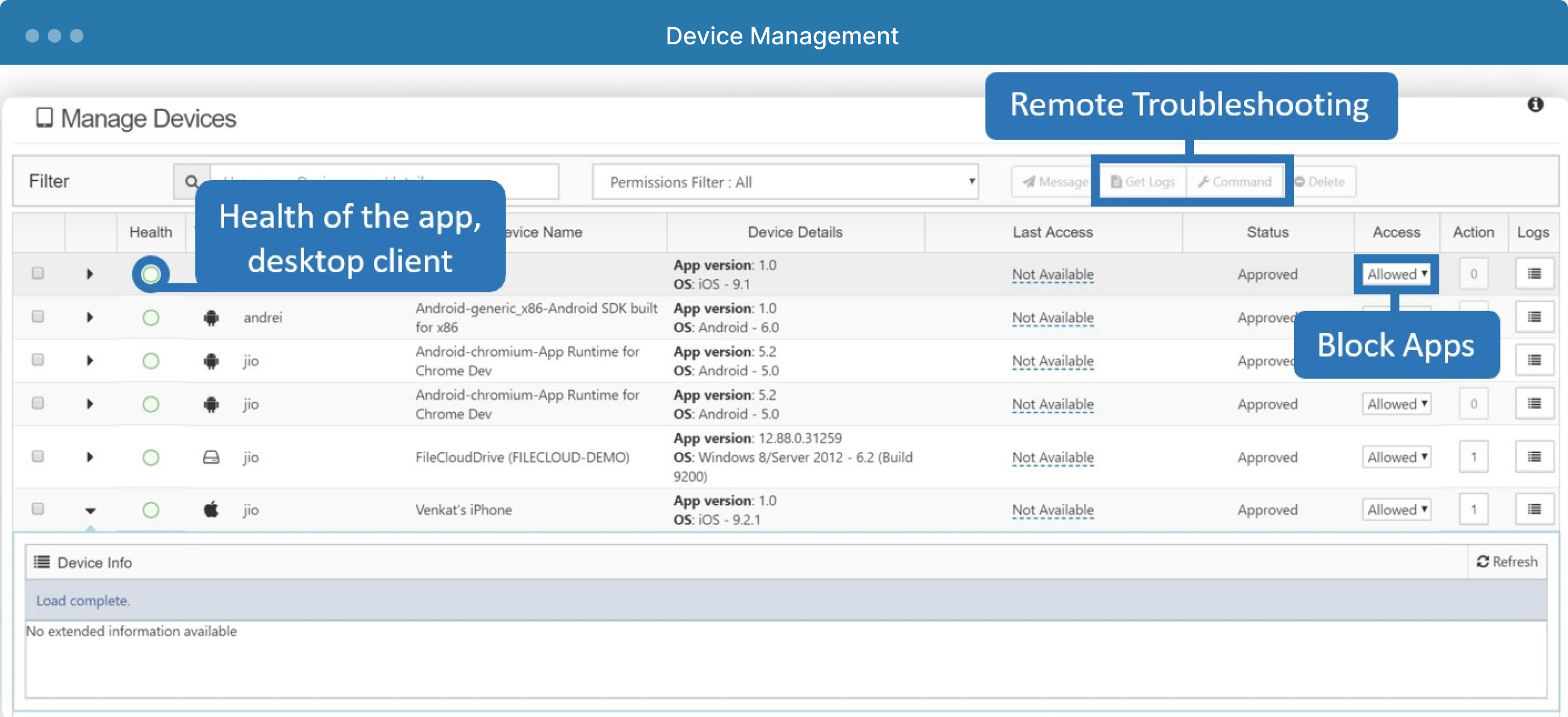
FileCloud’s access policies and intuitive UI support seamless end-user adoption and remote access without requiring VPN connections. The platform’s mobile applications provide full functionality across devices while maintaining the same security controls and user experience as desktop access. This consistency reduces training requirements and support tickets while ensuring that remote workers remain productive regardless of their location or device. Remote device management ensures that admins can oversee device connections and take action when needed to secure data and support users.
Conclusion
FileCloud’s EFSS approach eliminates many of the pain points that plague traditional enterprise content management implementations: uncontrolled shadow IT proliferation, infrastructure limitations, content collaboration challenges, and the ongoing costs of specialized IT management. The platform’s transparent pricing, flexible deployment options, and comprehensive security make it particularly attractive for organizations that want enterprise capabilities without enterprise complexity.
Ready to experience the difference? Sign up for a free trial to explore FileCloud’s capabilities in an enterprise environment, or schedule a personalized demo to see how FileCloud can address specific organizational requirements.
Looking for more competitive insights? Check out our Competitor Series, where we explore how FileCloud measures up against leading enterprise solutions.

Product Marketing Manager