Post updated July 25, 2025
CTERA vs FileCloud – Evaluating Enterprise File Sharing & Sync (EFSS) Solutions
When evaluating enterprise file sharing and collaboration solutions, IT leaders often find themselves comparing various platforms to find the best fit for their organization’s unique needs. Today, we’re diving deep into a comparison between FileCloud and CTERA. While both platforms aim to solve file management challenges, they take distinctly different approaches that can significantly impact an organization’s productivity, security, and bottom line. FileCloud is a powerful CTERA alternative, and this comparison will explain why.
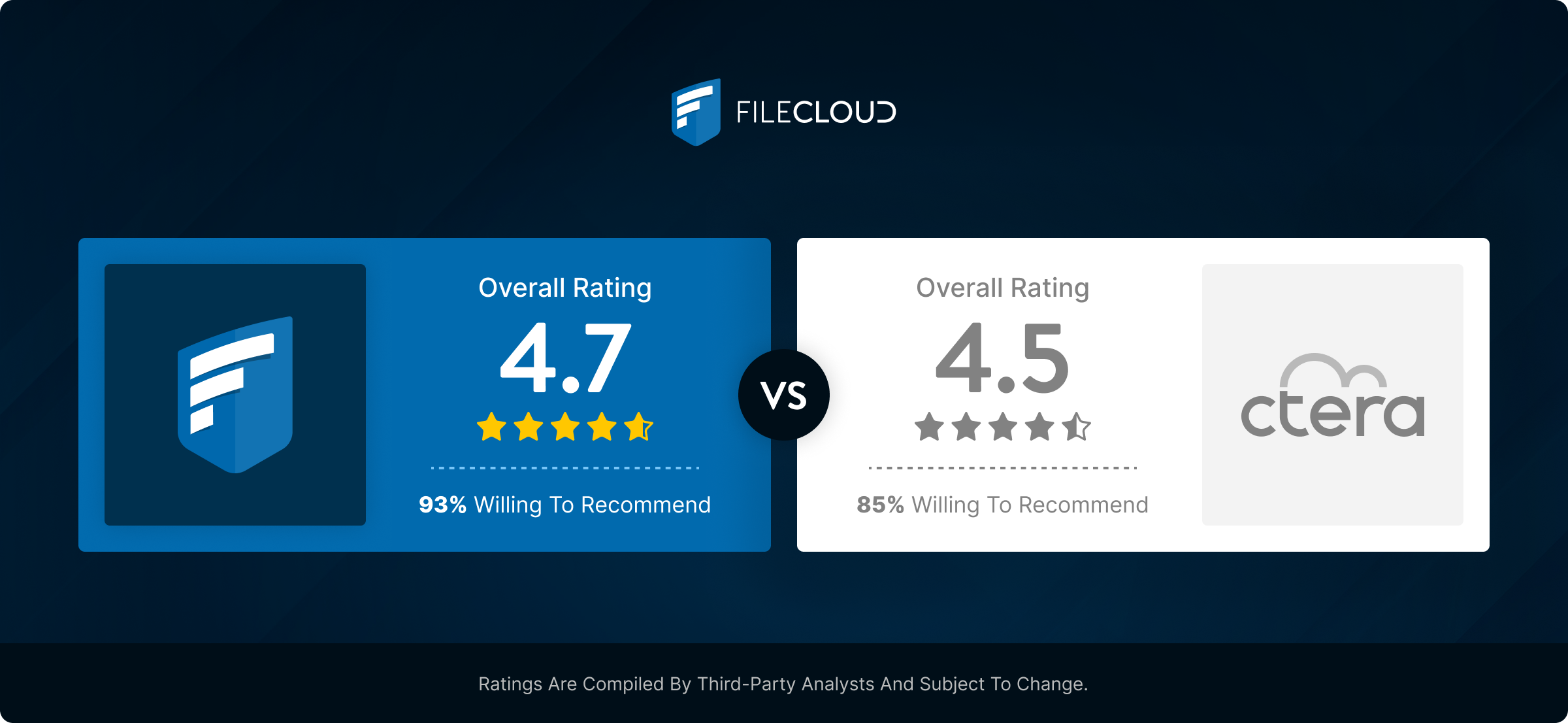
CTERA vs FileCloud: Deployment
One of the most critical decisions IT teams face is choosing between deployment models that align with their infrastructure strategy and business requirements. This is where the differences between CTERA and FileCloud become immediately apparent.
CTERA’s approach centers around a more complex, modular architecture that often requires significant add-ons to achieve comprehensive functionality. This modular structure can lead to unpredictable costs as needs evolve, making it challenging to budget effectively. Additionally, based on user reports, CTERA is also typically on the higher end when it comes to CapEx, which means a higher upfront expenditure.
FileCloud, on the other hand, offers transparent, competitive pricing across all deployment options—whether on-premises, hybrid, or cloud deployment. The enterprise tiers (Essentials, Advanced) provide clear feature sets without hidden costs or surprise add-ons.
This transparency extends to our integration and migration support, where we provide secure overlay capabilities for existing infrastructure, helping organizations bridge data silos while enabling remote access without the complexity of a complete infrastructure overhaul.
FileCloud vs CTERA: Admin Capabilities
Effective IT administration requires centralized control and comprehensive visibility across all data touchpoints. Unfortunately, CTERA falls short in several key administrative areas that matter most to IT teams.
With CTERA, administrators face restricted data visibility with no PII (Personally Identifiable Information) tagging or full content search capabilities, unless third-party integrations are involved. This limitation forces IT teams to rely on external solutions, adding complexity and cost to their technology stack.
As a CTERA alternative, FileCloud addresses these challenges head-on by providing centralized IT administration with complete data visibility and governance capabilities. The platform includes built-in access controls, content classification, and retention policies—all managed from a single, intuitive dashboard. This centralized approach eliminates the need for multiple third-party tools while giving administrators the comprehensive oversight they need to maintain security and compliance standards.

CTERA vs FileCloud: Security
In today’s threat landscape, security isn’t just a feature—it’s the foundation upon which all other capabilities must be built. Enterprise organizations, however, often grapple with how to leverage secure IT infrastructure without scrapping legacy IT infrastructure or incurring significant upfront capital expenses to re-create systems in updated, secure environments.
Yet the longer enterprises wait to implement some kind of solution, the more security vulnerabilities arise through patchwork integrations and shadow IT practices. When making a decision, organizations are not just choosing a solution for the next fiscal year – they’re choosing to invest in an infrastructure that will provide years of growth, scalability, and competency to meet the ever-evolving threat landscape.
With this long-term scope in mind, CTERA’s limited data governance tools make it a less robust choice for enterprises now and in the future.
FileCloud takes a security-first approach with enterprise-grade protection built into every layer of the platform. Our solution helps organizations drive digital transformation while maintaining strict security standards, replacing vulnerable legacy systems with modern, secure infrastructure. We provide comprehensive security features without requiring complex integrations, serving to mitigate risks associated with shadow IT.

CTERA vs FileCloud: Content Management
Effective content management goes beyond simple file storage—it requires intelligent organization, searchability, and metadata management capabilities that support how modern teams actually work.
CTERA’s very limited metadata support creates significant challenges for content organization and retrieval. Without the ability to create custom metadata sets, users struggle with content classification and finding the information they need when they need it. This limitation becomes even more problematic as data volumes grow and teams become more distributed.
FileCloud addresses these content management challenges with robust metadata support and intelligent content classification capabilities. Our platform empowers users to organize and find content efficiently while providing administrators with the tools they need to maintain governance and security standards across all content types.

FileCloud vs CTERA: Collaboration & Sharing
Modern work requires seamless collaboration capabilities that don’t compromise security or create friction for users. This is an area where CTERA’s limitations become particularly apparent in day-to-day operations.
CTERA restricts collaboration to manual file sharing without workflow automation or eSignature capabilities. This manual approach creates bottlenecks that slow down business processes and frustrate users who expect modern, streamlined collaboration experiences.
FileCloud delivers streamlined file sharing with real-time collaboration, unlimited external accounts (not just public file sharing links), comprehensive workflow automation, and integrated eSignature capabilities—all within a secure solution environment. This integrated approach eliminates the need for multiple collaboration tools while ensuring consistent security policies across all collaborative activities.
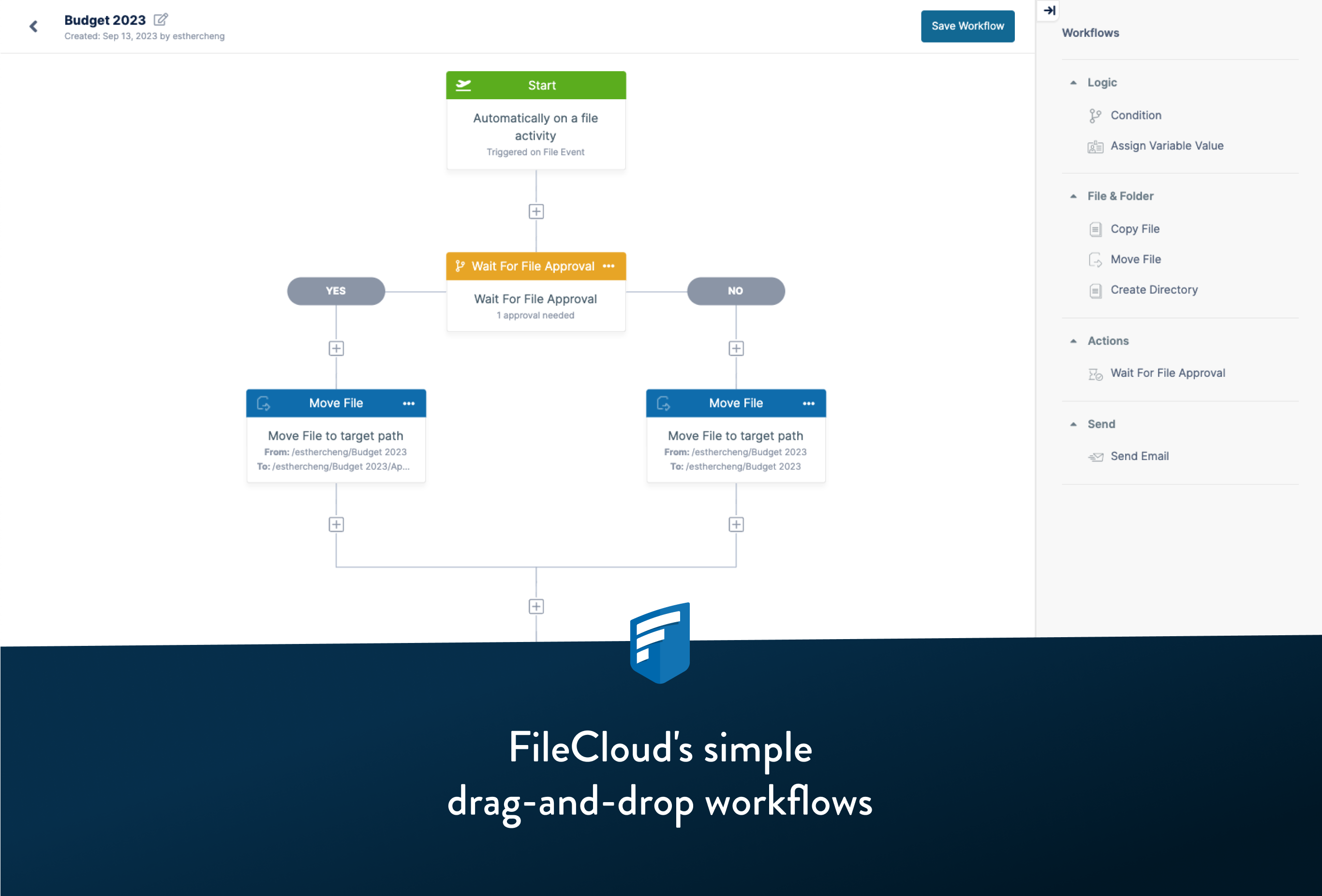
FileCloud vs CTERA: Compliance & Governance
Regulatory compliance and data governance have become non-negotiable requirements for most organizations. The ability to maintain compliance while enabling productivity is where FileCloud shines.
CTERA’s lack of unified compliance support through built-in dashboards creates significant challenges for organizations operating in regulated industries, such as government services, healthcare, or finance.
In comparison, FileCloud is a robust alternative to CTERA, offering compliance support through the Compliance Center, as well as compliance white papers and requirements checklists. Additionally, governance features are built into the solution, including hierarchical retention policies, metadata based content visibility, Data Leak Prevention (DLP), and Digital Rights Management (DRM)—without relying on third-party integrations.
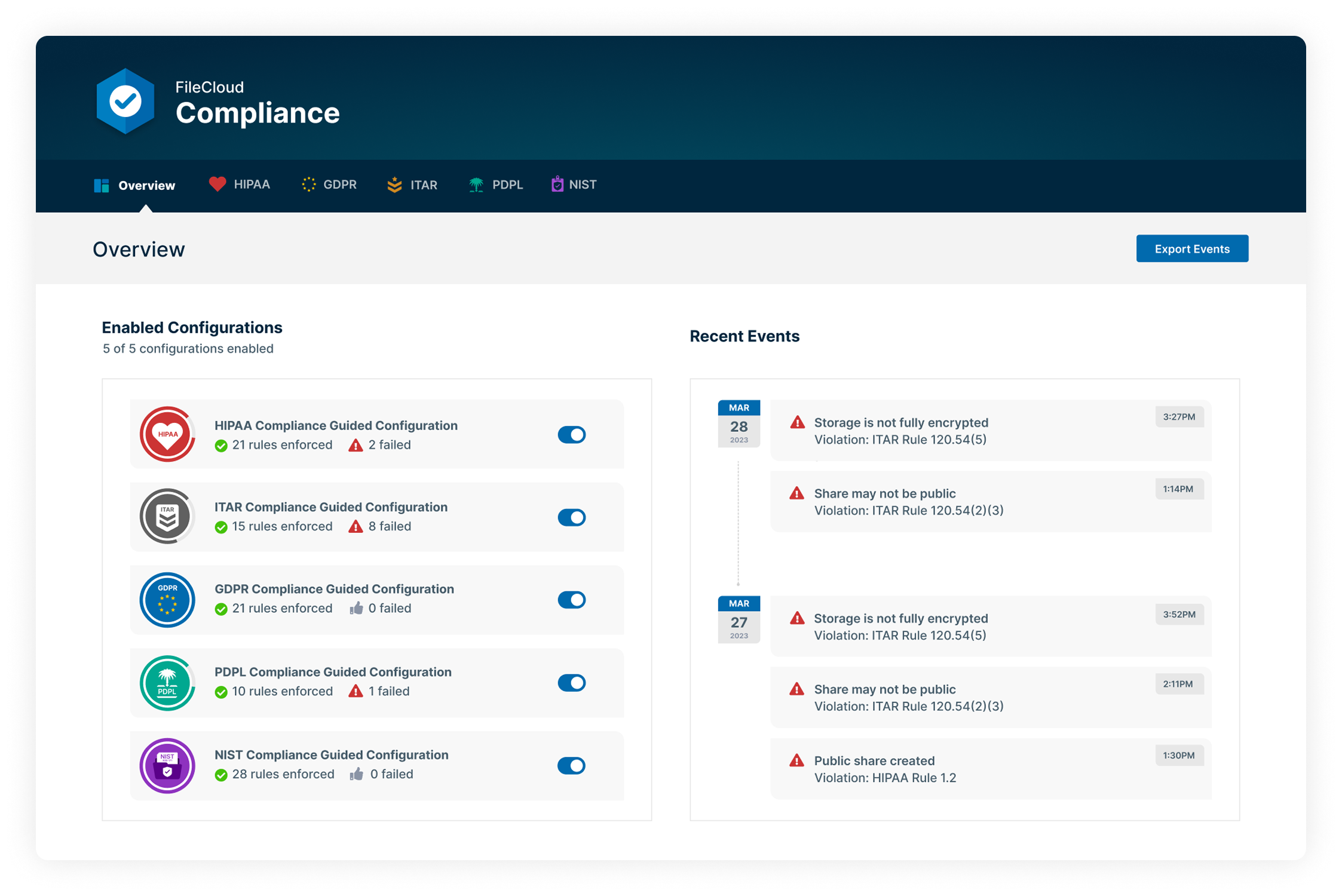
To achieve a similar environment with comprehensive governance across data, CTERA users must cobble together multiple solutions to meet compliance requirements.
CTERA vs FileCloud: Remote (Mobile) Access
With remote and hybrid work becoming the norm rather than the exception, mobile access capabilities have become critical for organizational productivity and employee satisfaction.
CTERA users may run into limitations if the organization has not specifically configured the solution with Edge Filers. These are add-ons to CTERA’s Enterprise File Services solution, designed to replace traditional file servers and NAS systems for a cloud-integrated UX (which includes remote mobile access).
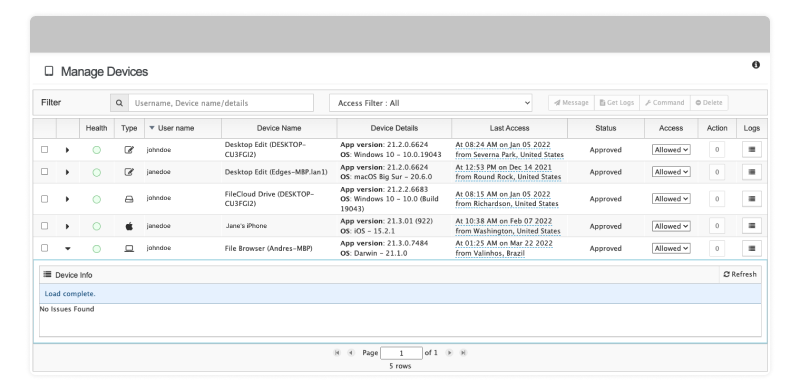
FileCloud eliminates these barriers with robust mobile access capabilities, available with the environment by default, that don’t compromise on functionality or performance. The platform provides seamless access to files and collaboration features across all devices, ensuring that remote workers have the same powerful capabilities whether they’re in the office or working from anywhere in the world. With FileCloud’s remote device management, admins can manage these remote connections, facilitating remote work while protecting enterprise data.
Conclusion
CTERA serves basic file storage needs, offering organizations a solution for cloud and hybrid file storage to meet increasing demands for digital transformation.
However, organizations seeking a comprehensive, scalable, and secure file sharing and data governance solution will find FileCloud offers significant advantages across every critical dimension—from deployment flexibility and administrative capabilities to security, compliance, and collaboration features.
FileCloud’s integrated approach eliminates the complexity and hidden costs associated with CTERA’s modular architecture while providing the transparency, security, and functionality that modern organizations require.
Ready to experience the FileCloud difference? Sign up for a free trial or schedule a personalized demo to see how FileCloud can transform your organization’s file sharing and collaboration capabilities while maintaining the security and governance standards your IT team demands.
Looking for more competitive insights? Check out our Competitor Series comparing FileCloud with leading enterprise solutions.

Product Marketing Manager