Protecting Data At Rest vs Data In Transit: A Complete Guide to Data Encryption & Security
Protecting data at rest and data in transit requires different security approaches because the data is in different states. Data at rest is inactive data stored on devices or in a database, making it vulnerable to unauthorized access if the storage medium is compromised. To protect it, encryption is crucial, rendering the data unreadable to anyone without the decryption key.
Conversely, data in transit is actively moving between locations over a network, making it susceptible to interception and eavesdropping. This is typically secured using encryption protocols like TLS/SSL that encrypt the data as it travels, ensuring it remains confidential and unaltered.
What is Data at Rest?
Data at rest is any information that is currently inactive and stored on a physical or digital medium. This includes files saved on a laptop, backups on a server, data within a database, or information stored in a cloud environment. Because it is static and not moving, this type of data is vulnerable to unauthorized access if the physical storage device is stolen or if a database is breached.
Think of it as a treasure chest: it’s secure only if the chest itself is protected with a lock and key. Understanding this state is the first step in implementing a robust strategy for protecting data at rest from internal and external threats.
How to Secure Data At Rest
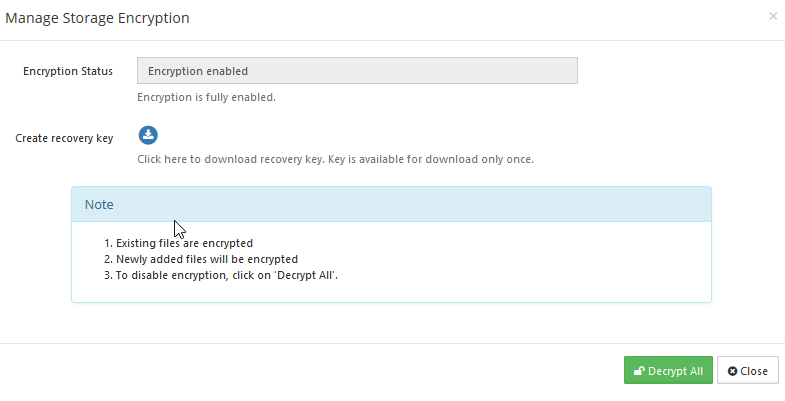
Securing data at rest is a critical component of any security plan. The primary objective is to make the data unreadable to anyone without proper authorization, even if they gain physical access to the storage medium. The most effective method is data encryption at rest, which scrambles the data into an unreadable format.
Beyond encryption, other key controls include robust access management, which ensures only authorized users can access specific files or databases. Additionally, deploying data at rest DLP (Data Loss Prevention) can help identify and protect sensitive information stored across your network, preventing accidental exposure or exfiltration.
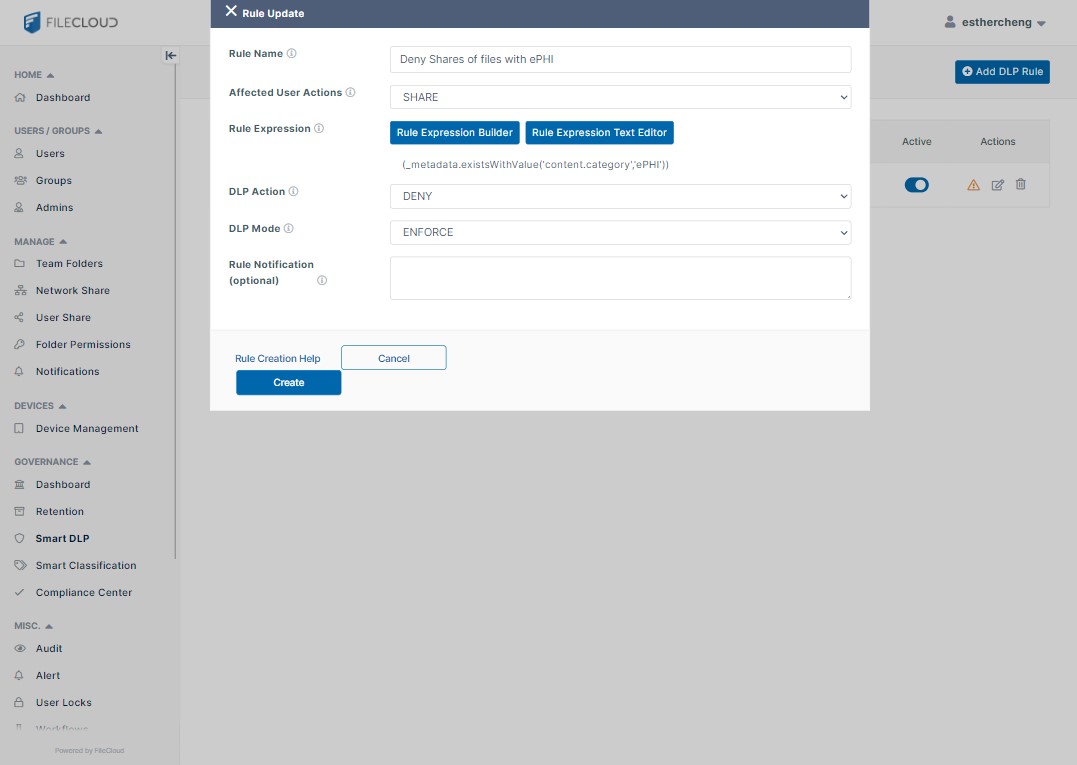
How to Encrypt Data at Rest
Encrypting data at rest is a foundational security practice. There are several methods to achieve this, depending on where your data is stored. For individual devices, full-disk encryption (FDE) encrypts the entire hard drive, securing all stored data.
For databases, specific database encryption methods can be used to encrypt entire tables, columns, or files within the database itself. In cloud environments, providers offer built-in encryption services that can be enabled with a simple setting. Regardless of the method, the core principle remains the same: use a strong encryption key and a secure key management system to ensure that your data is always protected and accessible only to trusted users.
What is Data in Transit?
Data in transit, also known as data in motion, is data that is actively moving from one location to another. This can happen over a public network, such as the internet, or a private internal network.
Common examples include sending an email, streaming a video, or the synchronization and transfer of files between your device and a cloud server. Unlike static data at rest, data in transit is vulnerable to interception and eavesdropping as it travels. An attacker could potentially intercept this data stream and read or modify the information. Securing this type of data is crucial to maintaining its confidentiality and integrity during its journey from one point to another.
How to Secure Data in Transit
Securing data in transit is all about protecting it while it travels across a network. The most common and effective method is to wrap the data in an encrypted tunnel, making it unreadable to anyone who might try to intercept it.
This is primarily done using standardized encryption protocols like Transport Layer Security (TLS) and its predecessor, SSL (Secure Sockets Layer). When a secure connection is established—like when you see “https://” in your browser’s address bar—these protocols ensure that any data exchanged between your device and the server is encrypted. For modern file sharing, leveraging a secure platform that automatically handles this encryption is the most reliable way to prevent malicious actors from listening in on your network traffic.

Data in Transition Encryption
Data in transit encryption relies on cryptographic protocols to create a secure, private communication channel over a public network. The process typically begins with a “handshake” between the client and the server, where they agree on the encryption methods and securely exchange cryptographic keys.
Once the secure connection is established, all data transmitted through it is encrypted, scrambling the information into an unreadable format. This ensures that even if a cybercriminal manages to intercept the data packets, they will only see gibberish. This type of encryption is a non-negotiable part of modern network security and is essential for everything from online banking to private messaging.
Data At Rest vs Data In Motion
The fundamental difference between data at rest vs data in motion lies in its state of being. Data at rest is static and stored, making its primary risk physical or logical access to the storage medium. The key protection methods for this data are encryption and robust access controls. In contrast, data in motion (or in transit) is dynamic, traveling between different points, and its primary risk is interception over the network. Securing this data relies on encryption protocols like TLS that create secure tunnels for communication.
A holistic data security strategy recognizes that both states are vulnerable and implements tailored security measures to protect data at every stage of its lifecycle.

Why is Encrypting Data at Rest Sometimes More Complicated Than Encrypting Data in Transit?
Encrypting data at rest can be more complex than encrypting data in transit due to several factors. For data in transit, standardized and widely-adopted protocols like TLS/SSL handle the encryption process automatically, making it relatively straightforward to implement.
Data at rest, however, presents unique challenges. One major complication is key management; securing and managing the encryption keys for vast amounts of static data is a significant and often manual task. Furthermore, implementing database or file-level encryption can impact system performance and requires careful planning to avoid disrupting normal operations.
This is why a simple TLS certificate for a website is often considered a far less complex undertaking than a full database encryption project.
Data at Rest vs Data in Motion for Financial Documents
File sharing for financial institutions is a perfect example of sensitive data that exists in both data at rest and data in transit state, each with its own set of vulnerabilities.
When financial records, like invoices, payroll information, or tax returns, are saved on a local server or in a cloud storage account, they are considered data at rest. To protect them from theft or unauthorized access, robust security measures like strong encryption, strict access controls, and regular data backups are absolutely essential.
Conversely, when these documents are sent to a client via email, uploaded to a banking portal, or transferred between company departments, they are considered data in transit. In this state, they are susceptible to interception. It is critical to use secure, encrypted channels like SFTP or HTTPS to protect them, as sending unencrypted financial documents exposes them to serious risk.
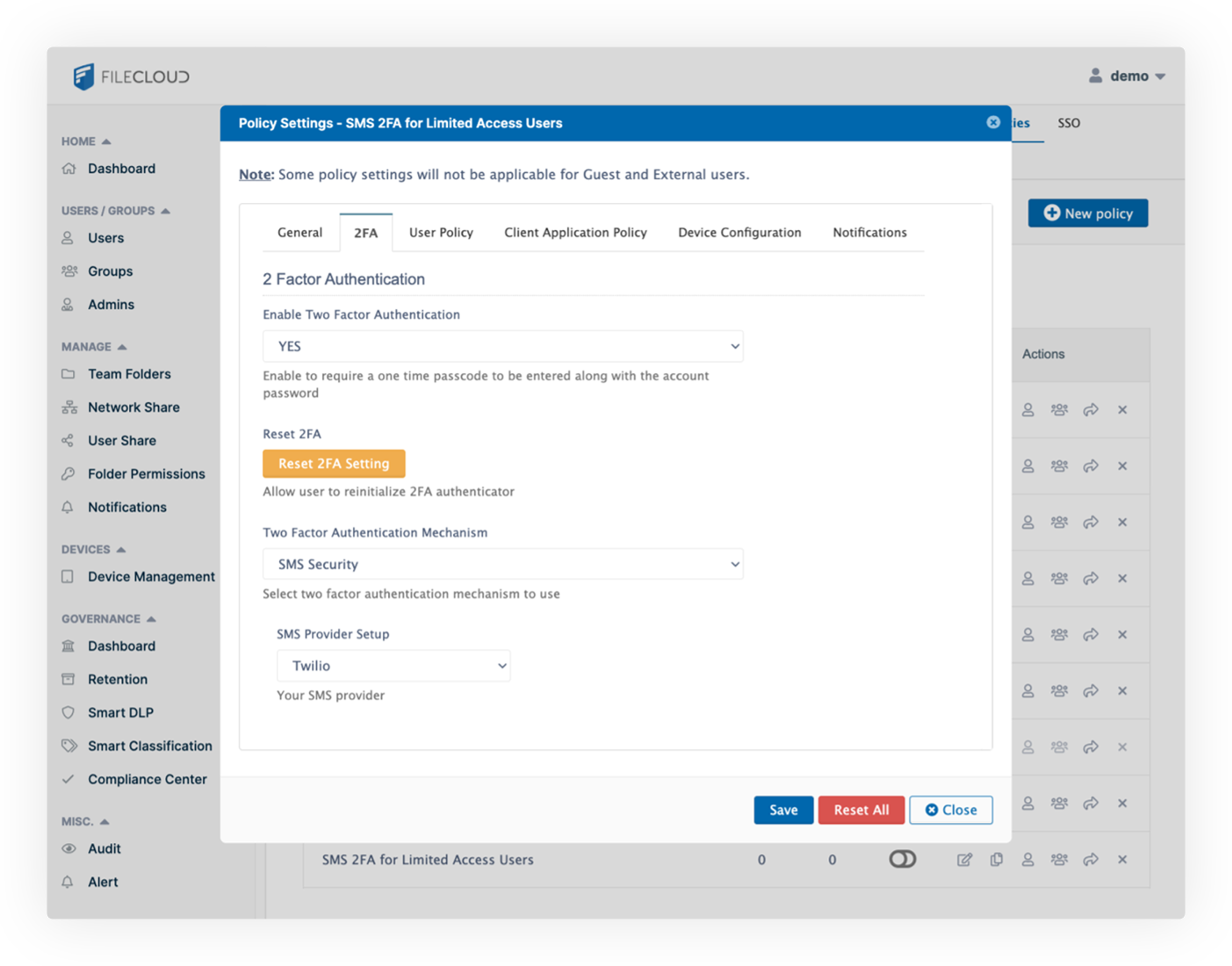
How FileCloud Simplifies Secure File Sharing
Managing data security at rest and in transit can be complex, but a professional file sharing solution like FileCloud simplifies the entire process. FileCloud is built on a foundation of end-to-end encryption, ensuring your files are protected at every stage. For data at rest, all files stored on the FileCloud platform are secured with AES (Advanced Encryption Standard) keys, making files unreadable to unauthorized users.
For data in transit, every file upload, download, and synchronization is automatically secured with TLS/SSL protocols, creating an encrypted tunnel that protects your data as it moves. By using a unified platform, you eliminate the risks associated with insecure file transfers and manual encryption, gaining peace of mind that your sensitive documents are protected from creation to delivery.
Data at Rest vs Data in Motion FAQs
What are some data at rest examples?
Data at rest refers to any data that is inactive and stored in a digital format. Examples include files saved on a hard drive, data in a database, information stored on a flash drive, backups on a server, and data in cloud storage services. In essence, it’s any data that isn’t actively moving across a network.
Which database encryption method can you use to encrypt data at rest?
There are several methods for database encryption at rest, including Transparent Data Encryption (TDE), which encrypts the entire database file without requiring changes to the application. Other options include column-level encryption, which allows you to encrypt specific, sensitive data fields within a table, and file-level encryption, where individual files containing database data are encrypted. The best method depends on your specific security needs and the database system you’re using.
How does data at rest DLP work?
Data at rest DLP is a security tool designed to find and protect sensitive information stored on a network. It works by scanning databases, file shares, and other storage locations to identify specific types of confidential data (like credit card numbers or Social Security numbers). Once identified, the DLP system can take action to secure the data, such as quarantining it, encrypting it, or alerting an administrator to a policy violation.
How does data encryption at rest HIPAA compliance work?
Data encryption at rest HIPAA compliance is a critical requirement for any organization that handles electronic protected health information (ePHI). While HIPAA doesn’t mandate a specific type of encryption, it requires organizations to use “appropriate safeguards” to protect ePHI. The National Institute of Standards and Technology (NIST) recommends using strong encryption standards like AES-256 for this purpose. By encrypting ePHI while it’s stored, you can significantly reduce the risk of a breach and ensure that even if a storage device is stolen or compromised, the data remains unreadable.

Product Marketing Manager