FedRAMP for Secure, Federal File Sharing and Collaboration
In an era where data breaches and cybersecurity threats pose increasing risks to government operations, securing sensitive federal information has never been more critical. For federal agencies and defense contractors handling Controlled Unclassified Information (CUI), International Traffic in Arms Regulations (ITAR) data, and other high-impact federal information, the bar for security and compliance continues to rise.
This blog post explores what FedRAMP is, what it means for an IT provider to have FedRAMP High authorization, and why it matters for federal agencies and defense contractors.
Understanding FedRAMP: The Foundation of Federal Cloud Security
The Federal Risk and Authorization Management Program (FedRAMP) is a government-wide program that provides a standardized approach to security assessment, authorization, and continuous monitoring for cloud products and services. Established to accelerate the adoption of secure cloud solutions across federal agencies, FedRAMP ensures that cloud service providers meet rigorous security requirements based on National Institute of Standards and Technology (NIST) controls.
FedRAMP certification is not merely a checkbox exercise. It represents a comprehensive evaluation of a cloud platform’s security posture, encompassing technical controls, operational procedures, and continuous monitoring capabilities. For federal agencies, working with FedRAMP-authorized vendors means partnering with solutions that have undergone intense scrutiny and demonstrated their ability to protect government data.
The Three Levels of FedRAMP Authorization
FedRAMP authorization is structured across three impact levels, each designed to address different types of federal data and corresponding security requirements:
FedRAMP Low
This baseline level applies to cloud systems processing low-impact data where the loss of confidentiality, integrity, or availability would have limited adverse effects on agency operations, assets, or individuals. FedRAMP Low requires adherence to approximately 125 security controls.
FedRAMP Moderate
The moderate level addresses cloud systems that handle data where loss could have serious adverse effects. This level, which covers the majority of FedRAMP-authorized systems, requires implementation of about 325 security controls and is appropriate for systems processing general federal information.
FedRAMP High
The highest authorization level is reserved for cloud systems processing data where loss of confidentiality, integrity, or availability could have severe or catastrophic effects on agency operations, assets, or individuals. FedRAMP High demands compliance with more than 420 stringent security controls, representing the most rigorous security standards within the federal cloud framework.
Why FedRAMP High Authorization Matters
Achieving FedRAMP High authorization is a monumental undertaking that demonstrates a cloud service provider’s commitment to the highest standards of federal security compliance. This authorization enables federal agencies to confidently deploy the platform for their most sensitive workloads, including:
- Controlled Unclassified Information (CUI): Federal data that requires safeguarding or dissemination controls pursuant to laws, regulations, or government-wide policies. CUI encompasses sensitive but unclassified information ranging from personally identifiable information (PII) to law enforcement data and critical infrastructure information.
- High-Impact Federal Data: Information systems where the potential impact of a security breach is considered severe or catastrophic, affecting national security, economic stability, public health, or safety.
- Defense and Intelligence Information: Data related to national defense activities, intelligence operations, and other security-sensitive functions requiring the highest levels of protection.
The rigorous security controls mandated by FedRAMP High include advanced encryption standards (FIPS 140-3), comprehensive access controls, detailed audit logging, incident response procedures, and continuous security monitoring. These controls ensure that data remains protected throughout its entire lifecycle, from creation and storage to sharing and deletion.
The CMMC Connection: Critical for Defense Contractors
For defense contractors and subcontractors, FedRAMP High authorization takes on additional significance through its connection to the Cybersecurity Maturity Model Certification (CMMC) framework.
CMMC is the Department of Defense’s unified standard for implementing cybersecurity across the defense industrial base, designed to protect Federal Contract Information (FCI) and CUI within contractor networks.
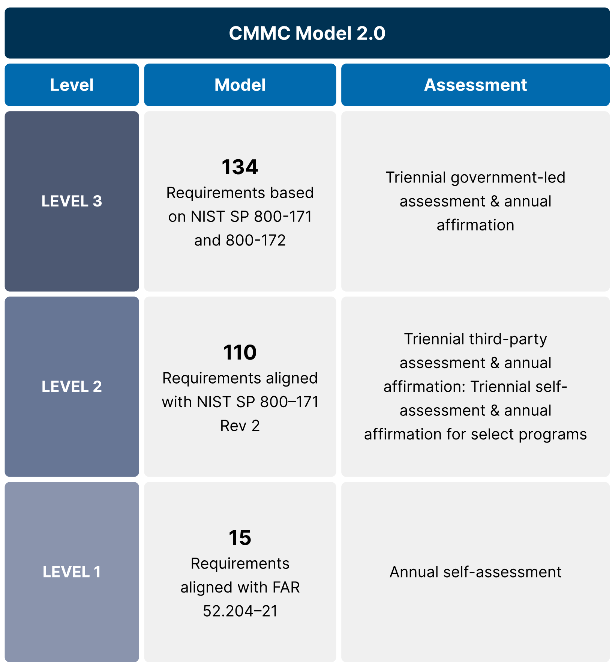
Under CMMC Level 2 requirements, defense contractors must implement NIST SP 800-171 security controls and demonstrate compliance through third-party assessment. Organizations handling CUI must also comply with Defense Federal Acquisition Regulation Supplement (DFARS) 7012, which mandates adequate security to safeguard covered defense information. This alignment of FedRAMP High with CMMC requirements is particularly valuable as CMMC becomes mandatory across DoD contracts.
The Journey to FedRAMP High: What It Takes
Achieving FedRAMP High authorization is an intensive process that demonstrates an organization’s commitment to federal security excellence. The journey typically involves:
- System Security Plan Development: Creating comprehensive documentation of all security controls, policies, procedures, and architectural diagrams that demonstrate compliance with NIST security requirements.
- Independent Assessment: Engaging a FedRAMP-accredited Third-Party Assessment Organization (3PAO) to conduct rigorous security testing and validation of all implemented controls.
- Remediation and Documentation: Addressing any identified gaps or weaknesses and documenting plans of action and milestones for ongoing improvements.
- Authorization Review: Submitting the complete security package to the FedRAMP Program Management Office or an authorizing agency for review and approval.
- Continuous Monitoring: Implementing ongoing security monitoring, vulnerability scanning, and monthly reporting to maintain authorization status and adapt to evolving threats.
This process can take 12-24 months and requires significant investment in security infrastructure, personnel, and documentation.
Looking Ahead: The Future of Federal File Sharing
As federal cybersecurity requirements continue to evolve, the importance of FedRAMP High authorized solutions will only increase. Several trends are shaping the future of federal file sharing and collaboration:
- Zero Trust Architecture: Federal agencies are increasingly adopting zero trust security models that assume no implicit trust and verify every access request.
- Expanded CMMC Requirements: As CMMC becomes mandatory across the defense industrial base, demand for FedRAMP High solutions that support CMMC compliance will grow significantly.
- AI and Automation: Advanced technologies like artificial intelligence and machine learning are being integrated into security platforms to enhance threat detection, automate compliance tasks, and improve data classification accuracy.
- Enhanced Collaboration: Federal agencies are seeking solutions that enable seamless collaboration with contractors, state and local governments, and international partners while maintaining strict security and compliance controls.
FileCloud’s FedRAMP High Authorized Solution
For federal agencies and defense contractors evaluating cloud file sharing and collaboration platforms, FileCloud offers a FedRAMP High authorized solution purpose-built to meet the demands of sensitive government workloads.
FileCloud’s platform is authorized at the FedRAMP High impact level, meaning it has been independently assessed and validated against all 420+ required security controls by an accredited Third-Party Assessment Organization (3PAO). This authorization enables agencies and contractors to deploy FileCloud for their most sensitive use cases, including systems processing CUI, ITAR-controlled data, and high-impact federal information, with confidence that the underlying platform meets the federal government’s most rigorous security standards.
Beyond the authorization itself, FileCloud is designed to support the practical compliance needs of its federal customers. The platform includes built-in support for CMMC Level 2 alignment, DFARS 7012 requirements, and NIST SP 800-171 controls, making it a strong fit for defense contractors working to demonstrate compliance across their supply chain. Features such as FIPS 140-3 validated encryption, granular access controls, comprehensive audit logging, and automated data classification help organizations operationalize their compliance obligations rather than simply document them.
FileCloud is listed on the FedRAMP Marketplace through FedHIVE, a FedRAMP High authorized accelerator platform. The FedRAMP Marketplace listing provides information on authorization status, security package details, and agency sponsorships as part of their acquisition and authorization-to-operate (ATO) process.
FedRAMP for Federal File Sharing
Securing federal data in the cloud is a foundational requirement for agencies and contractors operating in today’s threat environment. FedRAMP provides the framework that makes it possible to evaluate and trust cloud solutions with sensitive government information; FedRAMP High authorization represents the highest level of assurance that framework offers.
As compliance requirements such as CMMC continue to mature and zero trust adoption accelerates across the federal enterprise, organizations that invest in FedRAMP High authorized platforms will be better positioned to move quickly, reduce compliance risk, and protect the information that matters most.
Selecting the right platform means looking beyond the authorization badge to evaluate how well a solution supports your specific workloads, integrates with your existing environment, and enables your teams to collaborate securely — today and as requirements evolve.
Ready to explore FileCloud’s FedRAMP High file sharing solution?
Schedule a consult with a FileCloud expert!
Frequently Asked Questions
What is FedRAMP?
FedRAMP is a government-wide program providing standardized security assessment, authorization, and continuous monitoring for cloud services. It ensures cloud providers meet rigorous federal security requirements based on NIST controls before federal agencies can use their services.
What are the levels of FedRAMP?
FedRAMP has three authorization levels: Low (125 controls), Moderate (325 controls), and High (420+ controls). Each level addresses different data sensitivity and impact, with High being the most rigorous for systems handling data where security loss could cause severe effects.
Why do companies need FedRAMP?
Companies need FedRAMP authorization to provide cloud services to federal agencies. It demonstrates that their security controls meet federal standards, gives agencies confidence in their security posture, and enables compliant cloud adoption across government organizations while streamlining the authorization process.
What is the difference between FedRAMP and CMMC?
FedRAMP authorizes cloud service providers for federal agency use, while CMMC certifies defense contractors’ cybersecurity practices for handling DoD information. FedRAMP focuses on cloud platforms; CMMC addresses the entire defense industrial base. However, FedRAMP High solutions can support CMMC compliance requirements.
What is the difference between FedRAMP and NIST?
NIST develops cybersecurity frameworks and standards that serve as the foundation for various compliance programs. FedRAMP is a specific authorization program that applies NIST SP 800-53 controls to cloud service providers. Think of NIST as creating the standards, while FedRAMP implements them for federal cloud services.
How does a product get FedRAMP certified?
Products get FedRAMP authorized (not certified) through: implementing required security controls, documenting them in a System Security Plan, undergoing independent assessment by an accredited 3PAO, remediating findings, and receiving authorization from FedRAMP PMO or an agency. Continuous monitoring maintains the authorization.
How hard is it to get FedRAMP?
Achieving FedRAMP authorization is challenging, typically requiring 12-24 months and significant investment in security infrastructure, documentation, and third-party assessment. FedRAMP High is particularly demanding with 420+ controls. However, this rigor ensures that authorized systems meet the highest federal security standards.

Product Marketing Manager