What is Data Localization? Guide to Requirements
In this blog post, we discuss data localization, data localization requirements, and how this subject relates to data residency and data sovereignty. Read on to gain a better understanding of this evolving cybersecurity and regulatory concept!
What Is Data Localization?
Data localization is a legal requirement stipulating that certain data about a country’s citizens or residents must be physically stored and processed within that country’s borders. It’s a form of data protection that aims to keep data under the jurisdiction and scrutiny of local laws, primarily addressing concerns around national security, law enforcement access, and citizen privacy.
For global businesses, this means moving beyond a single cloud storage strategy and adopting a decentralized, regional approach to data management. Meeting these mandates is non-negotiable for operating internationally, and non-compliance can lead to severe fines and restrictions.

Host FileCloud in a preferred region and sync data with sites all over the world for secure collaboration and file sharing.
How Does Data Localization Work?
Data localization is typically enforced through national laws that dictate the geographical storage location of specific data types, often including personal data, financial records, or government information.
From an implementation perspective, this involves:
- Geographical Data Segregation: Companies must use regional data centers or self-hosted solutions within the required country to store the mandated data.
- Restricted Data Transfers: The laws often limit or outright prohibit the transfer of this data outside of the country’s borders, sometimes requiring a copy (or “mirror”) to remain local.
- Technological Compliance: Businesses rely on data mapping, robust access controls, and compliant cloud solutions, like FileCloud’s self-hosting options, to ensure data remains tethered to its legal geography.
Data Localization Requirements
Data localization requirements vary significantly across jurisdictions, often depending on the type of data and the industry. While some laws mandate in-country storage for all personal data (like in Russia or India), others are more targeted:
- Industry-Specific: Financial, healthcare (like HIPAA in the US), and government data often have stricter residency rules.
- National Security-Driven: Some nations demand local storage to ensure data is available for government and law enforcement access under local legal procedures.
- The “Mirroring” Requirement: Some laws permit data to be transferred out of the country, provided a full, up-to-date copy remains within the national borders.
Navigating these diverse and often conflicting laws requires a flexible, multi-region data strategy to avoid legal exposure and operational risk.
Best Practices for Managing Data Localization
Meeting data residency and data localization requirements isn’t a one-time task—it requires ongoing management and awareness. Follow these best practices to stay compliant and secure:
1. Conduct regular audits of your data storage and transfer practices
These audits ensure that your organization remains compliant with evolving data residency laws by country and any industry-specific regulations that apply.
2. Implement data mapping and classification processes
This helps identify where sensitive data resides and how it flows between regions. Transparency supports accountability, reporting, and compliance documentation. FileCloud reinforces these efforts by offering secure, affordable cloud storage that allows businesses to manage data according to their regional or organizational needs.
3. Train employees and partners on compliance obligations
Everyone involved in handling data should understand how residency and localization rules affect their work and what processes must be followed.
4. Establish a governance framework for global data management
Align company-wide policies with local regulatory demands to create a consistent, defensible compliance posture and reduce legal risk.
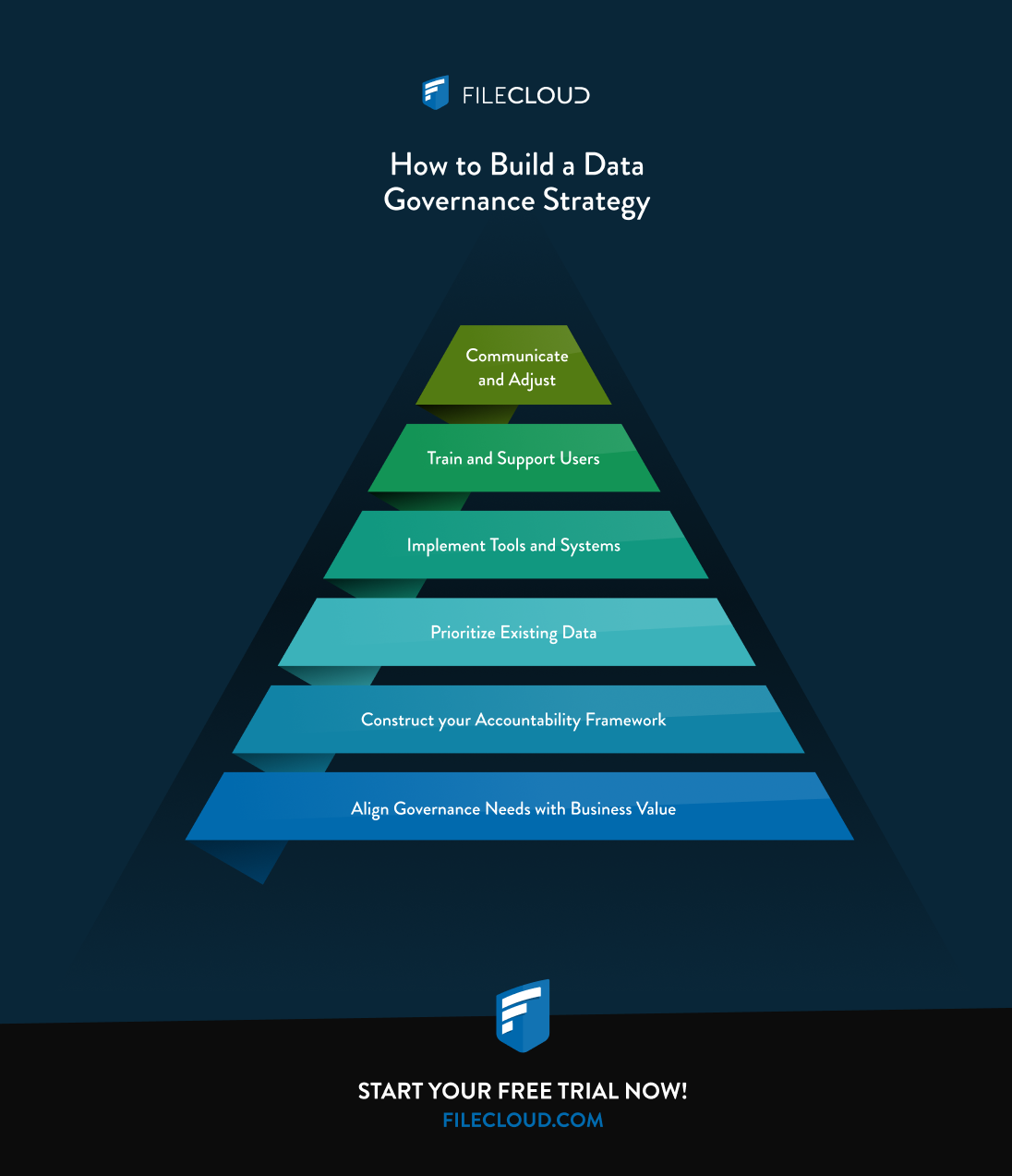
Learn how to create your data governance framework with FileCloud.
Data Residency vs Data Localization
While often used interchangeably, data residency and data localization have subtle but important distinctions:
- Data Residency Requirements: Refers to the requirement that data be stored in a specific geographic location, often a country or jurisdiction (e.g., “All EU customer data must reside in the EU”). This is a matter of where the data’s storage infrastructure physically is.
- Data Localization: Is a stricter requirement, stipulating that data must be stored and processed entirely within a country’s borders, often prohibiting or heavily restricting the transfer of that data outside the country. It is a legal framework designed to keep the data under local legal jurisdiction.
In practice, both concepts require robust tools—like FileCloud’s ability to host data on-premises or in specific regional cloud centers—to ensure compliance with the mandated physical location of data storage.
Data Security for Localization with FileCloud
Meeting localization mandates is only half the battle; the localized data must also be securely managed. FileCloud provides the necessary security and control layers to ensure data is compliant, protected, and accessible only to authorized users:
- Deployment Flexibility: Choose self-hosted (on-premises) deployment to guarantee data stays within your national infrastructure, or use region-specific cloud options to meet specific residency laws (e.g., data stays in Canada, Germany, etc.).
- Zero Trust File Sharing®: FileCloud applies strong access controls, encryption (at rest and in transit), and multi-factor authentication to protect localized data from unauthorized access, whether it’s stored on a server in Berlin or on-premises in Tokyo.
- Auditing and Governance: Detailed audit logs and powerful governance tools track every file access, modification, and transfer, providing the documentation needed to prove compliance during a regulatory audit.
By offering a platform that separates storage location from advanced data management features, FileCloud enables global organizations to satisfy strict localization laws without sacrificing security or operational efficiency.
Frequently Asked Questions About Data Localization
What is the difference between data sovereignty vs data localization?
Data sovereignty is a broader, legal concept asserting that a country’s data is subject only to the laws of that country, regardless of where the data is stored. Data localization is the mechanism—the legal requirement—used to enforce a country’s sovereignty over its data by mandating that the data be physically stored and processed within its borders.
What are data localization laws by country?
Data localization laws differ by region. The EU enforces data protection and transfer rules under the GDPR, while the United States has sector-specific and state-level regulations. China applies strict rules under the Cybersecurity Law and PIPL, Canada mandates in-country storage for certain government data, and nations like Russia, India, and Brazil have strong localization or “data mirroring” laws.
Why do countries enforce data localization laws?
Countries adopt data localization laws to safeguard citizens’ privacy, protect national security, and promote domestic data infrastructure. These measures also ensure that governments can access critical data when needed, though they can create compliance challenges for global organizations.
How can companies comply with data localization and residency laws?
Businesses can meet these requirements by using regional data centers, implementing strict data-mapping processes, partnering with vendors like FileCloud that offer region-specific hosting, and minimizing cross-border transfers while maintaining GDPR compliance.
What happens if a company doesn’t comply with data localization requirements?
Failure to comply with data localization or residency regulations can result in fines, restrictions, or service bans. Under laws like the GDPR, violations may lead to penalties of several million euros.
How does FileCloud help organizations meet data localization and residency requirements?
FileCloud allows organizations to control where their data resides through self-hosted and region-specific cloud deployments. It provides compliance tools for mapping and auditing data flows and integrates with local infrastructure to meet national storage laws, helping businesses remain compliant across multiple jurisdictions.

Product Marketing Manager