How to Prevent a Data Breach With Data Leakage Protection
Data breaches can be prevented with Data Leakage Protection (DLP) by implementing automated software and policies that actively monitor, classify, and control sensitive data. DLP stops unauthorized data transfers in real-time by enforcing security rules on data at rest, in use, and in motion, effectively neutralizing insider threats and accidental leaks before they become catastrophic breaches. A robust DLP solution identifies data exposure attempts and automatically takes remediation actions like blocking, encrypting, or wiping the data.
What is Data Leakage?
Data leakage occurs when sensitive, confidential, or proprietary information is inadvertently or maliciously exposed to unauthorized parties. Unlike a direct system compromise, a leak often involves internal processes, human error, or unsecured data handling, resulting in the unauthorized transfer of information out of a secure environment. This could be anything from a mistakenly sent email to a file uploaded to a personal cloud storage account.
Types of Data Leakage
Data leakage can manifest in several ways, often categorized by the state of the data:
- Data in Use: Data that is actively being processed, accessed, or modified by a user or application (e.g., copied to a clipboard, printed).
- Data in Motion / Data in Transit: Data that is currently being transmitted across a network, whether internally or externally (e.g., via email, instant messaging, FTP, or web uploads).
- Data at Rest: Data that is stored in any digital format, such as on a server, hard drive, database, or cloud repository.
Data Leaks vs. Data Breaches
|
Data Leak |
Data Breach |
| Action |
Accidental or unauthorized exposure or transmission of data. |
An incident where an unauthorized party actively gains access to and exfiltrates data from a secure environment. |
| Cause |
Primarily human error, misconfiguration, or weak internal controls. |
Primarily a malicious external attack (e.g., hacking, malware, exploiting vulnerabilities). |
| Result |
Sensitive data leaves the secure perimeter. |
Sensitive data is compromised and stolen. |
| Example |
An employee emails a spreadsheet of customer PII to the wrong external vendor. |
A hacker exploits a security flaw to gain access to a customer database and downloads the entire file. |
The Goal of DLP: To prevent the smaller, more common data leak from escalating into a catastrophic, reportable data breach.
What is Data Leakage Prevention?
Data Leakage Prevention (DLP) is a set of strategies, tools, and processes designed to ensure that sensitive data does not leave the corporate network. A robust Data Leak Protection solution identifies, monitors, and protects sensitive information whether it is at rest, in use, or in motion. By establishing and enforcing security policy, DLP acts as a critical security layer, specifically preventing unauthorized transmission and helping organizations meet strict compliance requirements (HIPAA, GDPR, etc.).
How to Prevent a Data Breach With Data Leakage Protection
Implementing a comprehensive DLP strategy is the most effective defense against accidental and insider-driven data breaches. Follow these steps for a successful deployment:
- Identify and Classify Data: Locate all sensitive data (PII, financial records, IP) and tag it according to its risk level and regulatory requirements.
- Define Protection Policies: Create clear, automated rules that dictate how classified data can be used, shared, and transferred. Policies should address file type, content, recipient, and destination.
- Monitor and Audit: Deploy DLP tools to continuously monitor all data channels (email, cloud, endpoints) for policy violations. Audit logs are crucial for identifying risky behaviors and refining policies.
- Educate Employees: Human error is a major cause of leaks. Conduct mandatory, recurring training to teach employees how to handle sensitive data, recognize phishing, and understand the consequences of policy violations.
- Enforce and Remediate: When a policy violation is detected, the DLP system should automatically take action, such as blocking the transmission, quarantining the file, encrypting the data, or alerting a security officer.
Data Leakage Prevention Tools
The modern security toolkit relies on various technologies to achieve comprehensive DLP. A hyper-secure platform like FileCloud integrates all these capabilities into one unified solution:
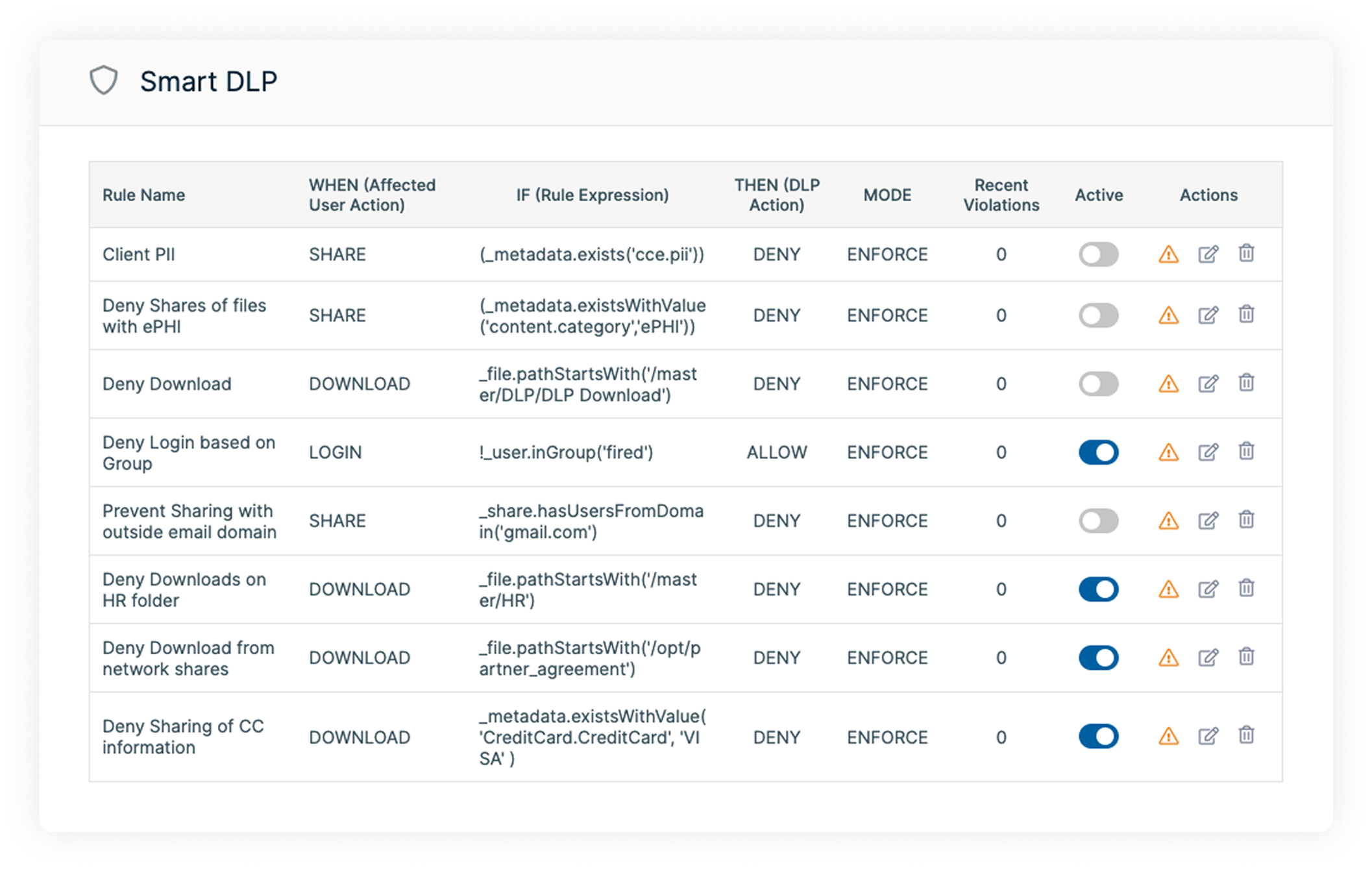
Smart DLP
A dedicated, intelligent DLP suite is the foundation of data protection. FileCloud’s Smart DLP goes beyond simple keywords, allowing administrators to define complex, rule-driven protection based on multiple factors:
- User actions (download, share, login)
- User types and groups
- IP range or location
- File metadata and content classification
Encryption
Encryption renders data unreadable to unauthorized users. It is a fundamental defense for data:
- Data at Rest: FileCloud uses AES 256-bit encryption to secure all files stored on the server, making your data impenetrable even if the storage medium is compromised.
- Data in Motion / Data in Transit: All transfers (uploads, downloads, syncs) are protected via a secure SSL/TLS tunnel, ensuring confidentiality during transmission.
For more information on the different kinds of encryption, read our blog post on Data at Rest vs Data in Transit.
Secure File Sharing
Replace unmanaged, risky consumer tools with a system that enforces security policies automatically. FileCloud offers Zero Trust File Sharing®, providing a platform for enterprise secure file transfer by ensuring:
- Encrypted sub-folders with granular permissions
- Password-protected sharing with expiry dates
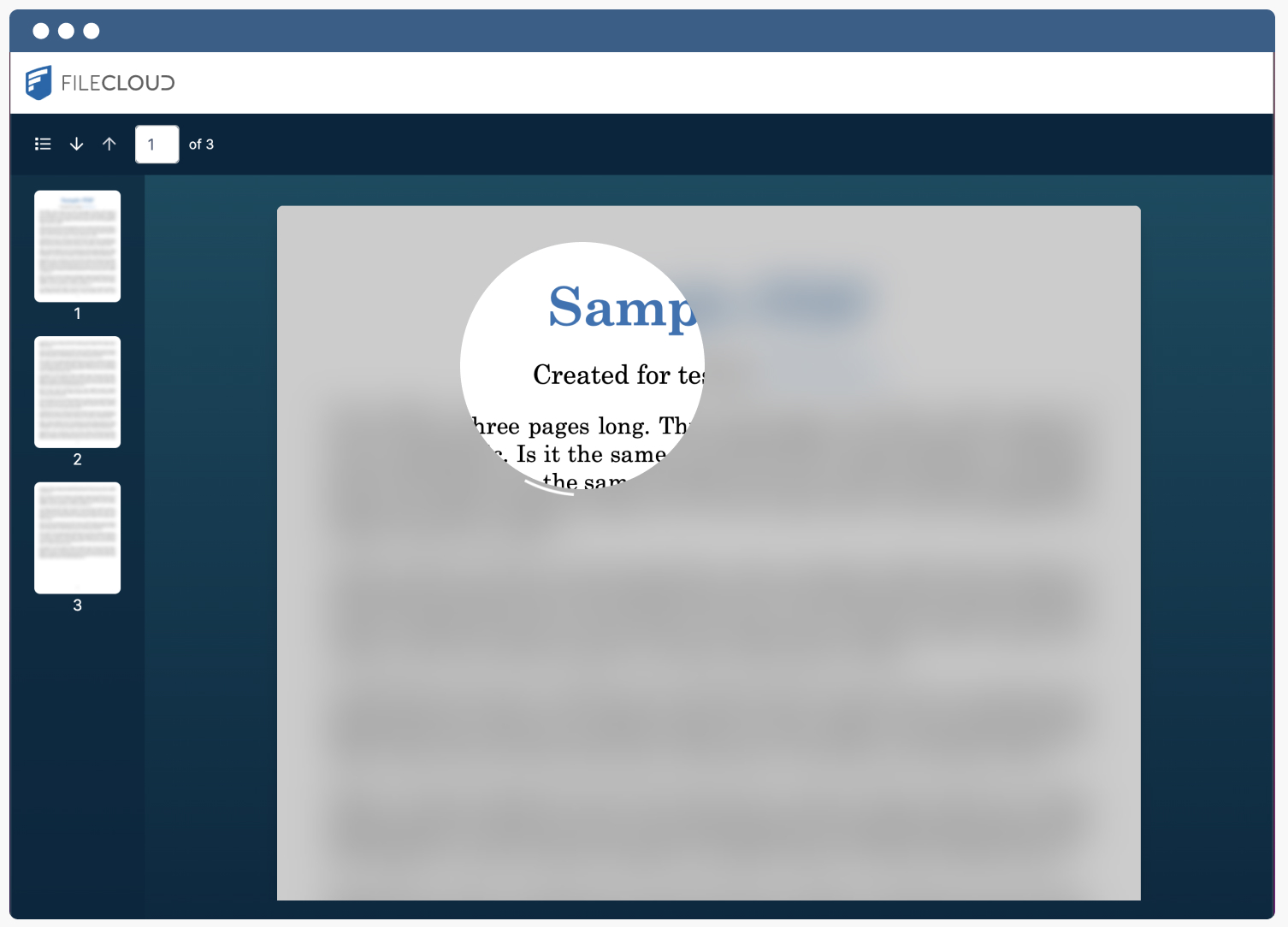
- Digital Rights Management (DRM) to prevent printing, copying, and unauthorized screenshots of sensitive documents.
Data Leakage Examples
Understanding real-world leaks highlights the need for DLP:
- Mistaken Email: An employee sends an email containing a spreadsheet of 500 customer names and credit card numbers to an external client who was not the intended recipient.
- Uncontrolled Cloud Upload: A remote worker uploads proprietary product design files to their personal, unsecured account to access them easily from home.
- Insider Threat: A disgruntled employee copies a complete client list onto a USB stick before leaving the company, bypassing standard system restrictions.
Data Leakage Prevention Software
If you are serious about protecting your organization from regulatory fines and reputational damage, a dedicated DLP platform is essential. FileCloud is the hyper-secure content collaboration platform trusted by organizations globally.
Why FileCloud is the right choice for DLP:
- 360° Protection: FileCloud covers data at rest (via AES 256-bit encryption), in motion (via SSL/TLS), and in use (via Endpoint DLP).
- Data Compliance Ready: FileCloud is built to help you meet standards like HIPAA, GDPR, ITAR, and more, with dedicated features like metadata tagging and comprehensive audit trails.
- Smart Automation: The rule-driven Smart DLP system reduces administrator workload by automating detection and enforcement in real-time.
- Deployment Flexibility: Deploy on-premises (full data ownership), self-host on your cloud (AWS/Azure), or use FileCloud as a SaaS solution.
Learn how FileCloud delivers truly secure file transfer regardless of your environment.
Data Leakage Prevention (DLP) FAQs
What is a data leakage protection policy?
It’s a formal set of rules and procedures an organization implements to govern how sensitive data is handled, stored, and transmitted, aiming to prevent unauthorized disclosure or loss.
How does data leakage detection work?
It involves actively monitoring and analyzing data streams (network traffic, emails, cloud storage, endpoints) for specific patterns, content, or metadata that match defined policies, indicating a potential leak or violation.
What are the best practices to avoid official data leakage through emails?
Key practices include email encryption, enforcing content filters to block sensitive information, providing mandatory employee training, and using DLP tools that automatically quarantine or alert on policy violations.
How does enterprise encryption software aid in data leakage prevention?
Encryption software scrambles sensitive data both in transit and at rest. Even if an unauthorized party gains access, the data remains unreadable without the correct decryption key, effectively neutralizing the impact of a leak.
What types of data leakage protection tools are available?
Tools often fall into categories like Network DLP (monitoring data in motion), Storage/Discovery DLP (scanning data at rest), and Endpoint DLP (monitoring user actions and devices).
What is endpoint data leakage protection?
It’s the process of securing data on user devices (laptops, desktops, mobile devices). This typically involves controlling data transfer to USB drives, printers, cloud apps, and monitoring application usage to prevent leaks from the user’s workspace.

Product Marketing Manager