Enterprise Digital Rights Management (E-DRM) is a security framework that protects sensitive business data by controlling how files are accessed, shared, and used, even after they leave the organization. It applies policies like encryption, permissions, and usage restrictions to prevent unauthorized access, copying, or distribution. As part of a broader enterprise file syncing and sharing strategy, E-DRM helps organizations maintain data security, ensure compliance, and retain control over intellectual property across both internal systems and external collaboration environments.
What is Digital Rights Management?
Digital Rights Management (DRM) is a technology used to control access to digital content and prevent unauthorized use, copying, or distribution. It applies security measures such as encryption, licensing, and usage restrictions to protect intellectual property like documents, media files, and software.
Traditionally, DRM has been widely used in industries such as media, entertainment, and publishing. Today, it plays an important role in secure file sharing, helping organizations safeguard sensitive content as it moves between users, devices, and platforms.
Enterprise Digital Right Management (E-DRM)
Enterprise Digital Rights Management (E-DRM) extends traditional DRM by focusing on protecting sensitive business data across the organization. Unlike standard DRM, which is primarily designed for content distribution, E-DRM is built for dynamic environments where data is frequently shared across teams, partners, and cloud platforms.
E-DRM enables organizations to enforce persistent, file-level security policies that travel with the data. These policies control who can access files, what actions they can take, and under what conditions. When combined with a Zero Trust File Sharing® approach, organizations can ensure that access is continuously verified and restricted to only what is necessary.
By integrating with enterprise systems and supporting compliance requirements, E-DRM helps reduce risk while enabling seamless collaboration. It also works alongside technologies like data loss prevention to monitor, control, and prevent unauthorized data exposure across distributed environments.
Tailored Data Protection with Enterprise DRM
Before exploring specific use cases, it’s important to recognize that not all data requires the same level of protection. Different file types, sensitivity levels, and sharing scenarios demand flexible, policy-driven controls.
Modern E-DRM solutions combine granular permissions, encryption, and Zero Trust principles to secure data wherever it travels, whether stored on-premises or across hybrid cloud storage environments.
Organizations can apply dynamic access controls based on user roles, location, device, and data classification. These controls persist beyond the network perimeter, ensuring continuous visibility and governance.
In practice, enterprise data protection typically falls into two broad categories:
-
Highly sensitive, mission-critical data
This includes intellectual property, financial records, engineering designs, and regulated data. These assets require strict access controls, encryption, audit trails, and compliance enforcement. Protecting this data demands centralized policy management and persistent security controls that remain with the file wherever it is shared.
-
Everyday business files and collaborative content
Documents such as reports, spreadsheets, presentations, and emails are frequently shared across teams and with external stakeholders. While individually less critical, their volume and distribution make them a significant risk vector. Protecting this data requires scalable, user-friendly solutions that apply consistent security without disrupting productivity.
Balancing Secure Sharing with Collaboration: EDRM Use Cases
Modern organizations must balance the need to protect sensitive data with the need to collaborate efficiently. As workforces become more distributed and data moves across cloud platforms, mobile devices, and external partners, traditional perimeter-based security is no longer sufficient.
To support secure collaboration, enterprise DRM solutions enable organizations to maintain control over files even after they are shared externally. This includes enforcing access restrictions, monitoring usage, and ensuring compliance with internal policies and regulatory requirements.
Common E-DRM use cases include:
Automated Protection for Shared Content
Files shared through collaboration platforms or exported from business applications can automatically inherit security policies, ensuring consistent protection without disrupting workflows.
User-Driven Protection with Centralized Oversight
sers can apply permissions and sharing controls directly, while IT maintains visibility and governance through centralized policy management and audit logs.
Secure Cloud and Hybrid Data Environments
Data stored across on-premises, cloud, and hybrid environments can be protected with persistent controls, ensuring secure access, compliance, and seamless collaboration across distributed teams.
Enterprise DRM with FileCloud
FileCloud enhances Enterprise Digital Rights Management by combining secure file sharing, granular access controls, and Zero Trust principles into a unified platform. It enables organizations to maintain full control over sensitive data throughout its lifecycle, regardless of where it is stored or shared.
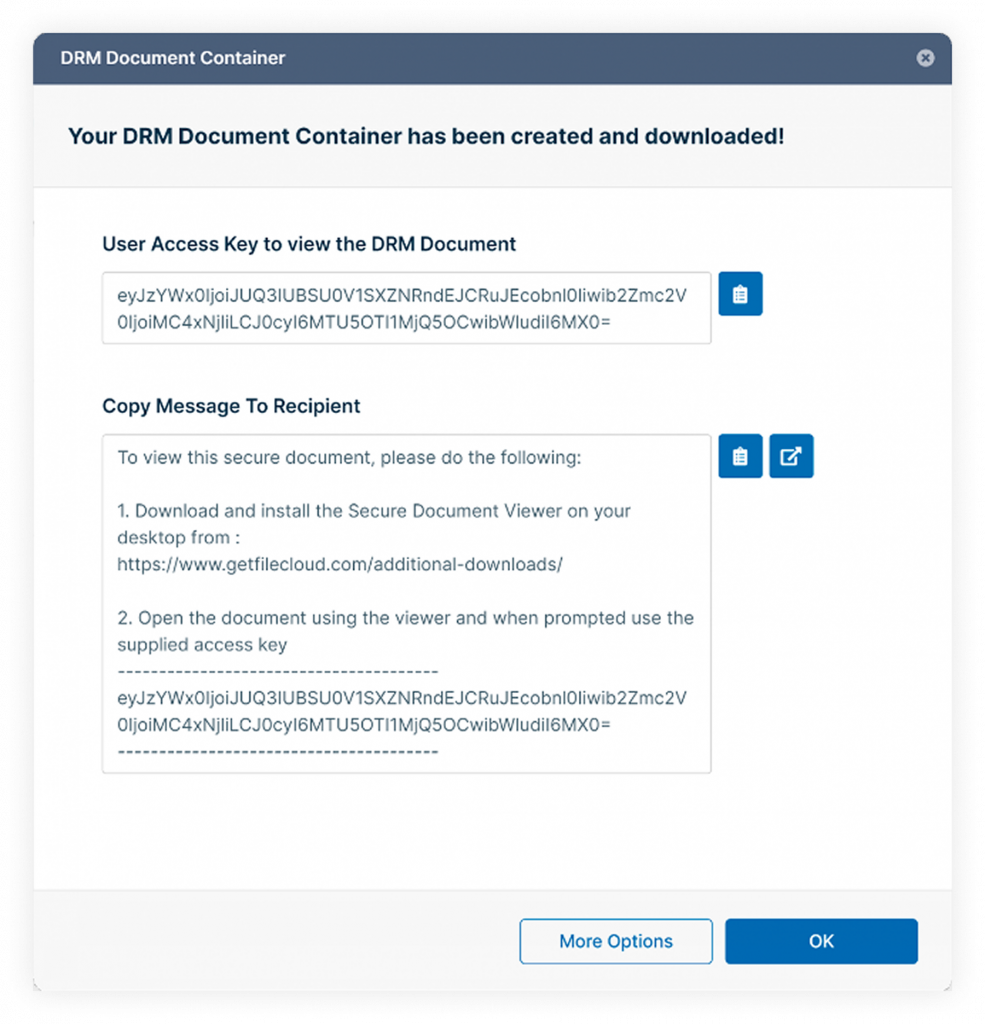
FileCloud’s DRM protection helps ensure that sensitive files and documents are protected, with both a light-weight web-viewer and a heavier-duty secure document client with screenshot and screenshare protection.
With additional built-in capabilities such as Zero Trust File Sharing®, organizations using FileCloud’s DRM can ensure that sensitive files remain protected even when shared outside network.
By integrating seamlessly with existing infrastructure, FileCloud allows organizations to enforce security policies without disrupting user workflows, enabling secure, scalable collaboration across the enterprise.
Ready to take control of your data with enterprise-grade DRM? Request a demo today to see how FileCloud can help you secure, share, and manage sensitive files with confidence.

Content Marketing Strategist