Data Sovereignty Compliance Made Easy with FileCloud

File Sharing While Meeting Data Sovereignty Standards

Get Free Trial →
Client Logo
Client Logo
Client Logo
Client Logo
Client Logo

How Data Sovereignty Enhances Compliance, Security, and IP Protection

Compliance with Data Regulations

Data sovereignty ensures your organization meets data protection and privacy laws that often require sensitive data to remain within specific geographic boundaries. Organizations must store and process data in a way that aligns with these legal frameworks. Failure to comply can lead to costly penalties and damage to reputation.

FileCloud’s data sovereignty file sharing helps ensure legal compliance by aligning your data management practices with regulatory requirements and enterprise security standards.

Enhanced Data Security

Storing data within your own jurisdiction or a trusted local data center significantly strengthens security. Data hosted in foreign countries or across international cloud servers may be subject to less stringent regulations and increase risk of unauthorized access.

With FileCloud, your organization retains full control over data location with data residency support, as well as multi-layered security protocols—minimizing the threat of breaches and supporting a robust cyber defense strategy.

Protecting Intellectual Property

Data sovereignty plays a vital role in protecting intellectual property (IP) and sensitive business information. Hosting data within your jurisdiction strengthens legal safeguards against IP theft and unauthorized data exposure.

FileCloud’s sovereign file sharing software allows you to maintain full control over proprietary content and trade secrets, reducing the risk of espionage, data loss, and compliance violations.

Gartner Per Insights Logo 2018
Gartner Per Insights Logo 2019
Gartner Per Insights Logo 2020
Gartner Per Insights Logo 2021
Gartner Per Insights Logo 2022

FileCloud has received the Gartner Peer Insights Customers’ Choice Distinction for the fifth consecutive time!

92% of our customers would recommend us to a friend.

Rating Stars Image 4.6

What is Data Sovereignty?

Data sovereignty is the principle that digital information is subject to the laws and regulations of the country where it is stored. While organizations may own the data, its handling and protection must comply with the legal framework of the hosting jurisdiction.

In today’s data-driven economy, where information is a critical asset, data sovereignty is essential. It empowers governments and organizations to maintain control over their digital assets, enforce regulatory compliance, and safeguard sensitive information against unauthorized access or foreign interference.

Why is Data Sovereignty Important?

Data sovereignty is more than a regulatory concern — it’s essential for protecting privacy, meeting compliance requirements, and maintaining control over sensitive information. FileCloud is built to help organizations address the most pressing data sovereignty challenges.
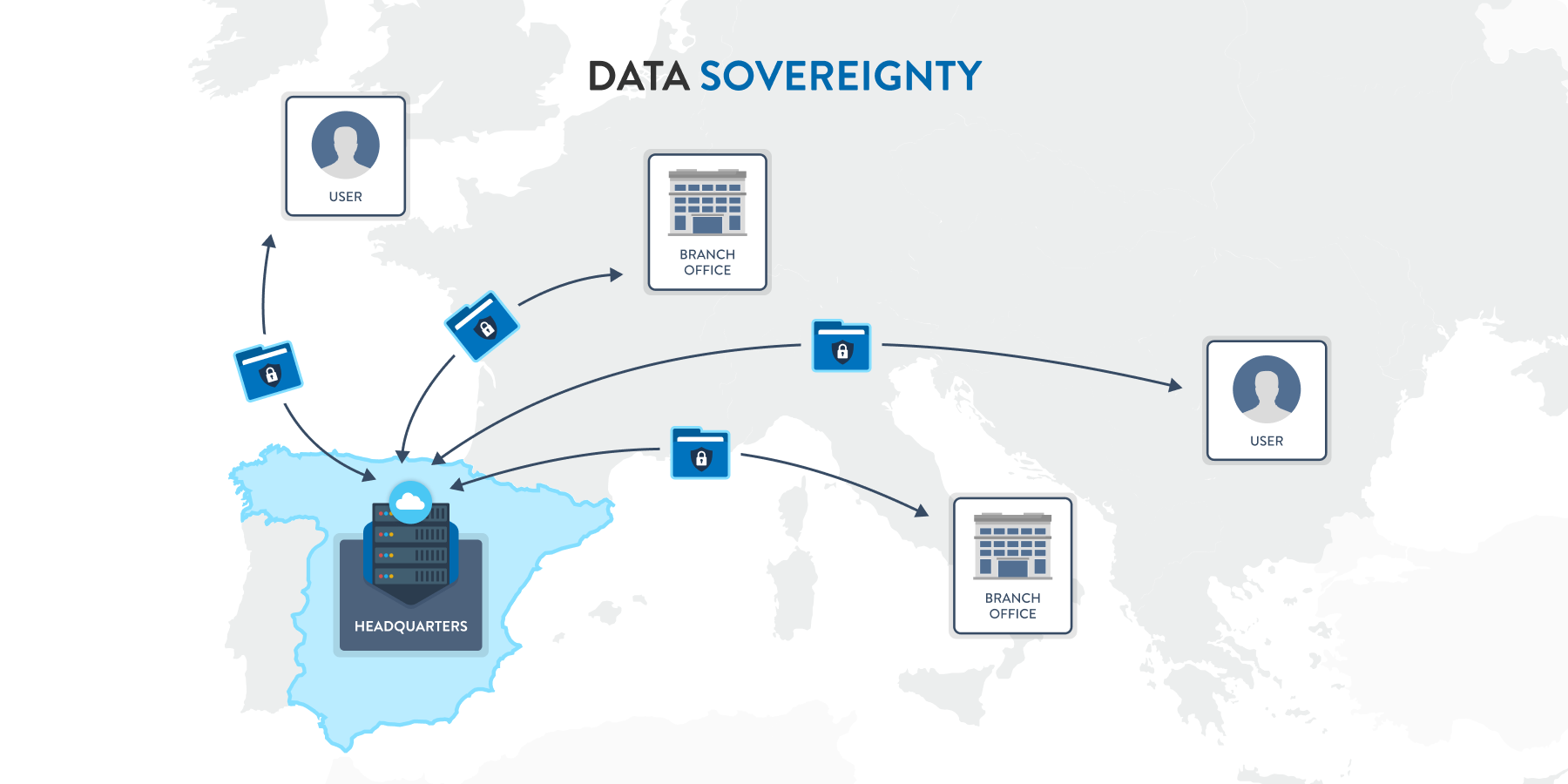
FileCloud Data Sovereignty for GDPR compliance

Sovereign Cloud

Sovereign cloud refers to cloud infrastructure designed to meet specific jurisdictional requirements, ensuring data remains under local legal authority and control. Cloud sovereignty extends this concept by emphasizing an organization’s ability to maintain complete governance over data, applications, and operations. Together, these principles address the growing need for cloud solutions that deliver modern capabilities around collaboration and digital transformation, without compromising regulatory compliance or national interests.

FileCloud enables true cloud sovereignty through flexible deployment options that ensure the organization maintains control over their data. Whether on-premises, in government-certified data centers, or region-specific cloud environments, FileCloud ensures data stays within a selected jurisdiction while delivering the scalability and collaboration features of modern cloud platforms. This approach allows enterprises to leverage cloud innovation while maintaining full authority over data location, access policies, and compliance measures.

Data Sovereignty Compliance Without Compromise

Regulations like GDPR, HIPAA, and others require data to remain within specific jurisdictions. FileCloud supports on-premises, hybrid, and region-specific hosting, helping you stay compliant and avoid costly penalties or legal risks.

Privacy and Legal Accountability

FileCloud ensures that personal and sensitive data is governed by your country’s laws — not foreign jurisdictions. Maintain full control over data access and prevent unauthorized surveillance or misuse.

Enterprise-Grade Security

International data transfers and foreign hosting can expose data to security gaps. FileCloud provides advanced protection with Zero Trust File Sharing®, end-to-end encryption, two-factor authentication, and role-based access controls.

Data Residency and Recovery

Organizations with legal or operational data residency requirements can deploy FileCloud locally or in-region. In the event of a breach or disaster, data can be quickly recovered under local authority, ensuring business continuity.

Safeguarding Business and National Interests

For enterprises and government agencies alike, FileCloud enables secure handling of classified, regulated, or proprietary data — protecting intellectual property and supporting national security objectives.
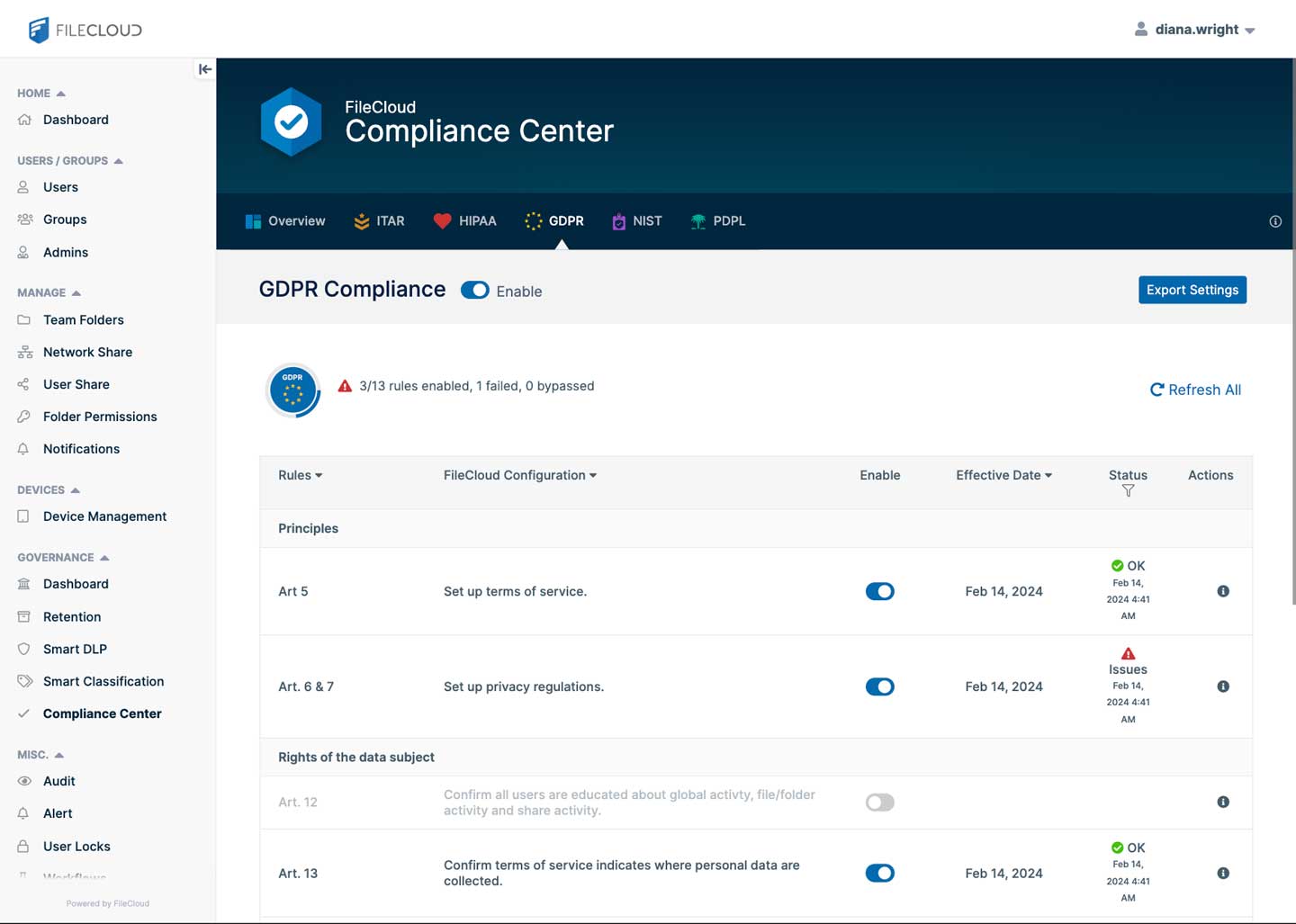
FileCloud UI - GDPR tab in FileCloud Compliance Center - Data Sovereignty compliance built into FileCloud

Frequently Asked Questions (FAQs)

What is data sovereignty?

Data sovereignty refers to the principle that data is subject to the laws and regulations of the country or region where it is stored or processed. It ensures that an organization's data is governed by the legal jurisdiction of the physical location in which it resides, impacting aspects like privacy, security, and access rights.

What are the requirements for data sovereignty?

Data sovereignty requirements are legal obligations that businesses must meet to ensure their data is stored, processed, and shared in compliance with the laws of the country or region it resides in. These requirements often involve data protection regulations like GDPR, and may mandate the storage of specific data within national borders to comply with local privacy and security standards.

How does data sovereignty differ from data residency?

Data sovereignty vs data residency are often confused, but they are distinct concepts, with data residency often being part of data sovereignty requirements. Data sovereignty refers to the legal jurisdiction governing data, whereas data residency refers to the physical location where data is stored. Organizations can achieve data residency without data sovereignty if foreign entities retain legal control.

How does data sovereignty differ from data localization?

Data sovereignty vs. data localization are related yet distinct concepts. Data sovereignty refers to the legal jurisdiction and laws governing the data, whereas data localization specifically refers to laws that require certain types of data to be stored within a particular geographic area. Data localization can be a subset of data sovereignty, where governments enforce data residency within national borders.

What are key data sovereignty regulations?

Data sovereignty regulations govern how data is handled, protected, and transferred between jurisdictions. Key regulations include GDPR in the EU, the California Consumer Privacy Act (CCPA) in the United States, and the Kingdom of Saudi Arabia's Personal Data Protection Law (PDPL). These regulations ensure that personal and sensitive data is not subject to foreign laws that could undermine privacy or security.

What are data sovereignty requirements for business?

Businesses must understand and comply with data sovereignty requirements, which can vary depending on the country in which the data is stored. These requirements often include securing data through encryption, ensuring compliance with privacy laws, and sometimes maintaining data within the borders of specific countries. Failing to comply with these requirements can result in legal penalties and reputational damage.

Worldwide

FileCloud
CodeLathe Technologies Inc.
dba FileCloud
125 Park Avenue FL 25
New York, NY 10017-5550

Fax: +1 (866) 824-9584

Europe

FileCloud Technologies Limited
Ducart Suite,
Castletroy Park Commercial Centre, Castletroy,
Limerick, Ireland


Copyright © FileCloud. All Rights Reserved.

Please select your country

SUBMIT