CMMC Compliance

Secure CUI File Sharing with FileCloud

Get Free Trial →
Client Logo
Client Logo
Client Logo
Client Logo
Client Logo

Secure File Sharing for CMMC Compliance

Protect CUI

Securely store, access, and share Controlled Unclassified Information (CUI) using enterprise-grade encryption, granular permissions, and Zero Trust File Sharing® designed to support CMMC compliance requirements.

Flexible Deployment

Deploy FileCloud in the environment that best supports your security requirements — FileCloud Server (self-hosted) or FileCloud FedRAMP, a FedRAMP High authorized cloud deployment hosted through FedHIVE.

Full Visibility

Maintain visibility and accountability with detailed audit trails, monitoring, and governance tools that help organizations manage sensitive files and demonstrate alignment with CMMC security practices.

Gartner Per Insights Logo 2018
Gartner Per Insights Logo 2019
Gartner Per Insights Logo 2020
Gartner Per Insights Logo 2021
Gartner Per Insights Logo 2022

FileCloud has received the Gartner Peer Insights Customers’ Choice Distinction for the fifth consecutive time!

92% of our customers would recommend us to a friend.

Rating Stars Image 4.6

CMMC Compliance: What It Is and Why It Matters

Organizations within the Defense Industrial Base (DIB) must meet strict cybersecurity standards when handling Federal Contract Information (FCI) and Controlled Unclassified Information (CUI), as established by Executive Order 13556.

Prior to the development of the CMMC program, these requirements were spread across several US federal standards. DIB contractors were expected to implement technical controls to comply with the Federal Acquisition Regulation (FAR) 52.204-21, NIST 800-171, and/or NIST 800-172.

The Cybersecurity Maturity Model Certification (CMMC) program streamlines these federal standards across three levels of progressively increasing cybersecurity controls. Contractors and subcontractors working with the Department of Defense are required to achieve certification before they can bid on contracts, and those contracts must match their CMMC level.
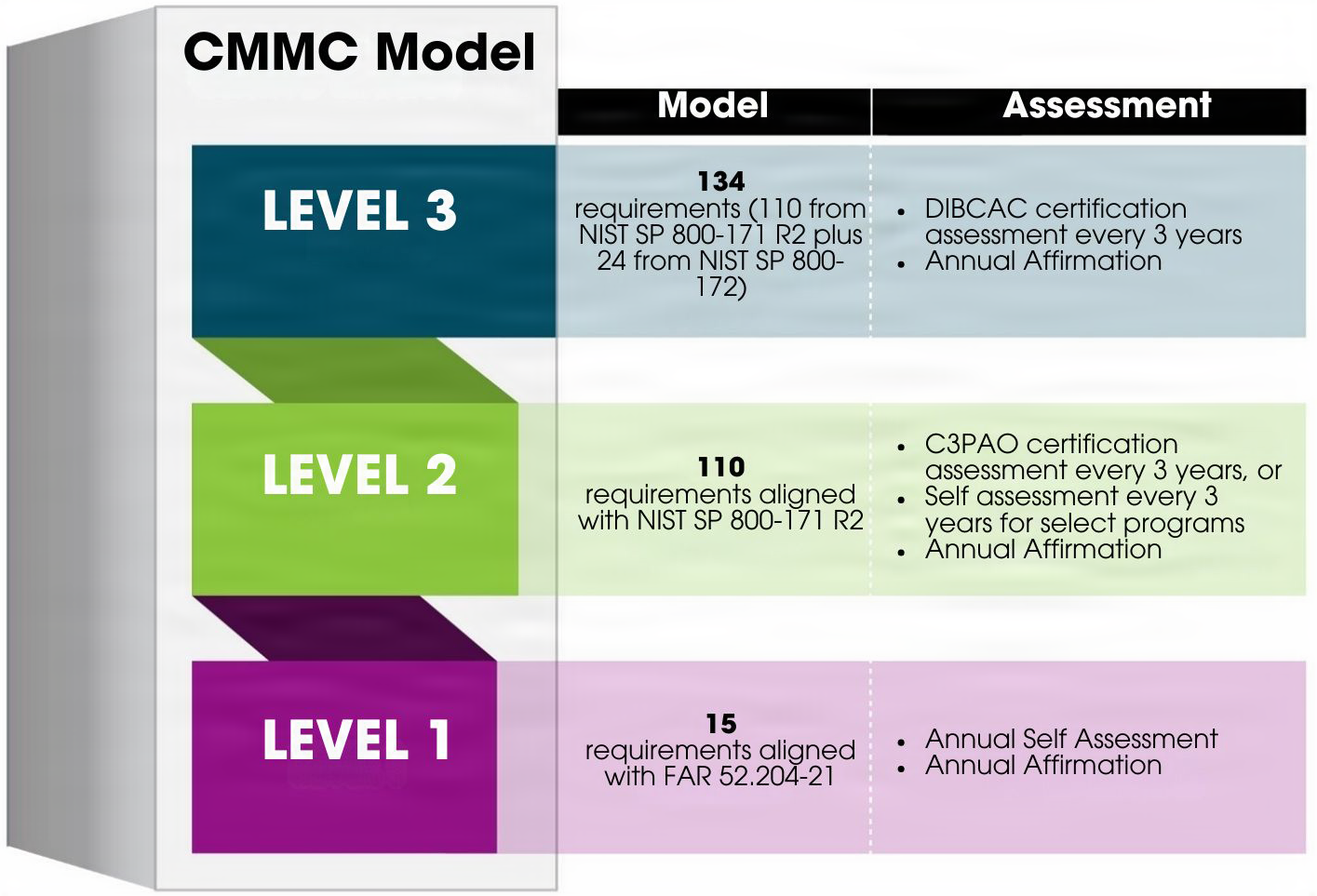
CMMC Levels, model, and assessment requirements

CMMC Model Infographic published by the DoD Chief Information Officer

The Department of Defense (DoD) oversees the CMMC program and anticipates that most DIB contractors will require Level 2 certification. However, many popular file sharing programs do not support CMMC Level 2 requirements for storing and sharing CUI.

FileCloud provides a secure enterprise file sharing platform that helps organizations support CMMC compliance when managing regulated files. With strong encryption, identity-based access controls, and detailed auditing capabilities, FileCloud helps organizations protect sensitive data across distributed teams and partners.

FileCloud Deployment Options to Support CMMC Compliance

Different organizations supporting the defense supply chain have different infrastructure and security requirements. FileCloud supports CMMC compliance across two deployment models while delivering the same secure collaboration experience.

FileCloud Server

FileCloud Server is a self-hosted deployment that allows organizations to run FileCloud within their own infrastructure. This deployment option is often preferred by organizations that require maximum control over their environment. This model enables organizations to maintain full control over their infrastructure while implementing secure collaboration capabilities required for CMMC compliance.

FileCloud Server can be deployed:

  • On-premises within secure data centers
  • In private cloud infrastructure such as AWS or Azure
  • Within isolated or restricted networks used for defense workloads

FileCloud FedRAMP

Organizations seeking a secure cloud deployment can use FileCloud FedRAMP, a FedRAMP High authorized cloud environment designed for organizations working with federal data.

FileCloud FedRAMP is hosted through the FedHIVE platform, which provides continuous monitoring, real-time threat detection, and incident reporting capabilities required for highly regulated government environments.

This deployment option allows contractors to leverage a secure cloud platform while supporting the security expectations associated with CMMC compliance.

FileCloud Security Controls for CMMC Requirements

FileCloud Admin Dashboard

Secure Collaboration Across the Defense Supply Chain

Defense projects often require collaboration between contractors, subcontractors, suppliers, and government agencies. Managing file sharing across these relationships while maintaining CMMC compliance can be challenging.

FileCloud enables secure collaboration through:

  • Secure sharing links with configurable permissions
  • File versioning and document locking
  • Secure partner access without exposing internal infrastructure
  • Integration with enterprise identity systems such as Active Directory

These capabilities allow organizations to collaborate efficiently while maintaining strong security controls around sensitive defense information.

ITAR Compliance Support for DIB Contractors

Some DIB contractors are tasked with complying not only with CMMC but also with ITAR, or the International Traffic in Arms Regulation.

In addition to security controls and collaboration features, FileCloud also provides a Compliance Center.

DIB contractors can streamline compliance administration through the ITAR dashboard, which connects specific ITAR requirements with the necessary FileCloud controls.

Facilitate secure storage, transmission and access to export-controlled data and prevent unauthorized foreign access to defense-related information.

Frequently Asked Questions (FAQs)

What is CMMC compliance?

CMMC compliance refers to meeting the cybersecurity requirements defined by the Cybersecurity Maturity Model Certification program established by the U.S. Department of Defense. The program ensures that contractors implement appropriate security controls to protect Controlled Unclassified Information (CUI).

What is Controlled Unclassified Information (CUI)?

Controlled Unclassified Information (CUI) is sensitive government information that requires safeguarding but is not classified. CUI is commonly handled by defense contractors and must be protected according to security requirements defined in the CMMC framework.

What is CMMC 2.0?

CMMC 2.0 streamlines requirements originally described in CMMC 1.0 into three levels of progressively increasing cybersecurity levels. Each level is keyed to US federal standards FAR 52.204–21, NIST 800-171, and NIST 800-172.

How does FileCloud support CMMC compliance?

FileCloud supports CMMC compliance by providing secure file sharing, encryption, identity management, auditing, and governance capabilities that help organizations protect sensitive defense information.

What deployment options does FileCloud offer for organizations seeking CMMC compliance?

FileCloud supports CMMC compliance through two deployment models. FileCloud Server is a self-hosted deployment for on-premises or private cloud infrastructure. FileCloud FedRAMP is a FedRAMP High authorized cloud deployment hosted through the FedHIVE platform. Both options provide secure collaboration capabilities for organizations handling regulated data.

Does CMMC require FedRAMP?

CMMC itself does not require FedRAMP authorization. However, organizations storing or processing government data in the cloud must ensure the cloud platform meets appropriate federal security standards such as FedRAMP.

Can FileCloud be deployed in isolated or secure environments?

Yes. FileCloud Server can be deployed on-premises, in private cloud infrastructure, or within restricted networks, allowing organizations to maintain full control over their data environment while supporting CMMC compliance.

Worldwide

FileCloud
CodeLathe Technologies Inc.
dba FileCloud
125 Park Avenue FL 25
New York, NY 10017-5550

Fax: +1 (866) 824-9584

Europe

FileCloud Technologies Limited
Ducart Suite,
Castletroy Park Commercial Centre, Castletroy,
Limerick, Ireland


Copyright © FileCloud. All Rights Reserved.

Please select your country

SUBMIT